30 Beautiful Upstairs Hallway Ideas: To Transform Your Home Space
Upstairs hallway ideas are some of the most overlooked opportunities in home design, even though this narrow stretch of space sees more daily foot traffic than almost any other room in the house. It connects bedrooms, bathrooms, and quiet corners, yet it rarely gets the same design attention as a living room or kitchen. Reimagining this space opens the door to a surprising amount of creativity and personality.
Instead of thinking about the upstairs hallway as a plain pass-through, homeowners are learning to treat it as a canvas for color, texture, light, and personal storytelling. From subtle lighting changes to bold gallery walls, there is no shortage of inspiration for turning a forgotten corridor into one of the most charming parts of the home. The variety of approaches means there really is something for every style and budget.
Best Upstairs Hallway Ideas to Try
There are countless directions to take when reimagining a hallway, and the best upstairs hallway ideas usually combine a few elements at once rather than relying on a single trick. Lighting, color, texture, and thoughtful storage all play a part in shaping how the space feels the moment someone steps into it. Layering these elements together is often what separates a forgettable hallway from a memorable one.
Below are thirty distinct directions worth exploring, ranging from bold statement pieces to soft, quiet touches. Some ideas work beautifully in wide, sunlit hallways, while others are designed specifically for narrow or windowless spaces. Reading through this list should spark a few favorites worth adapting to your own home.
Gallery Wall Upstairs Hallway Ideas
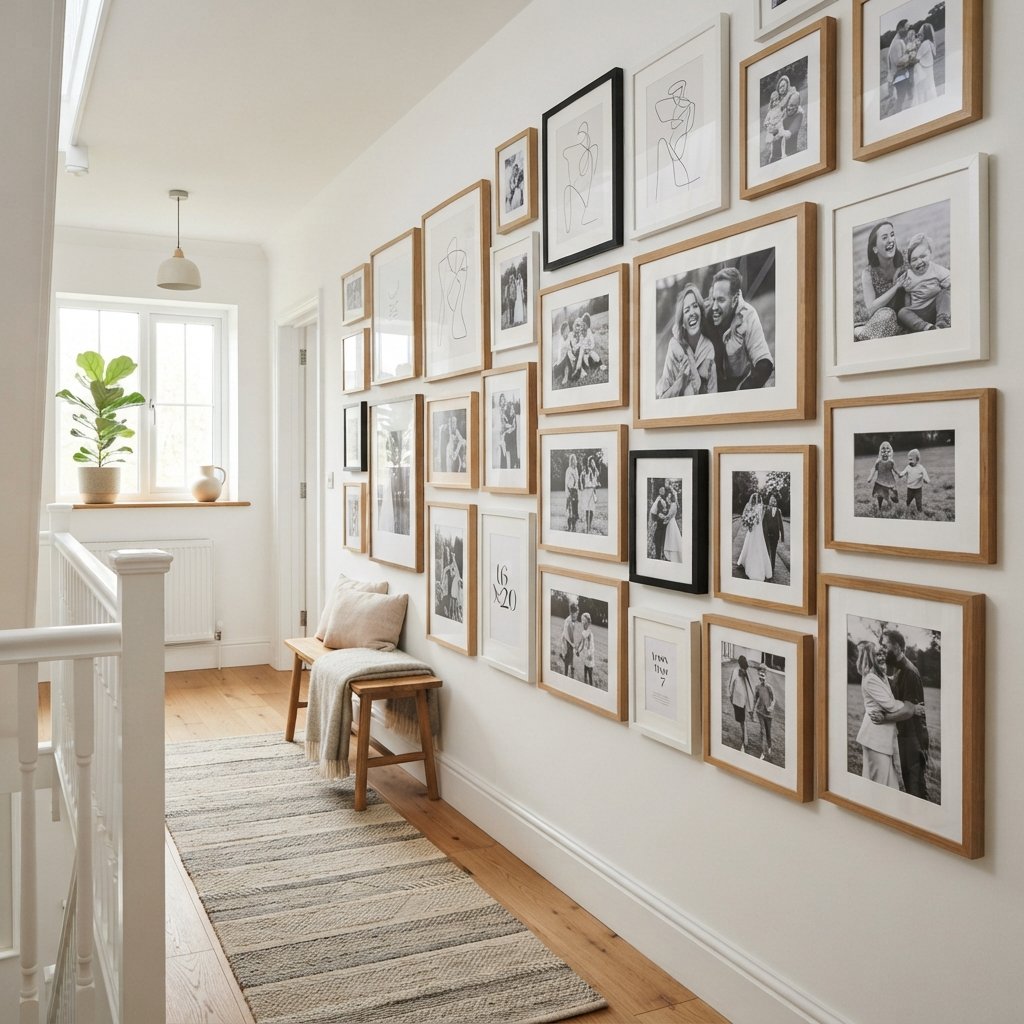
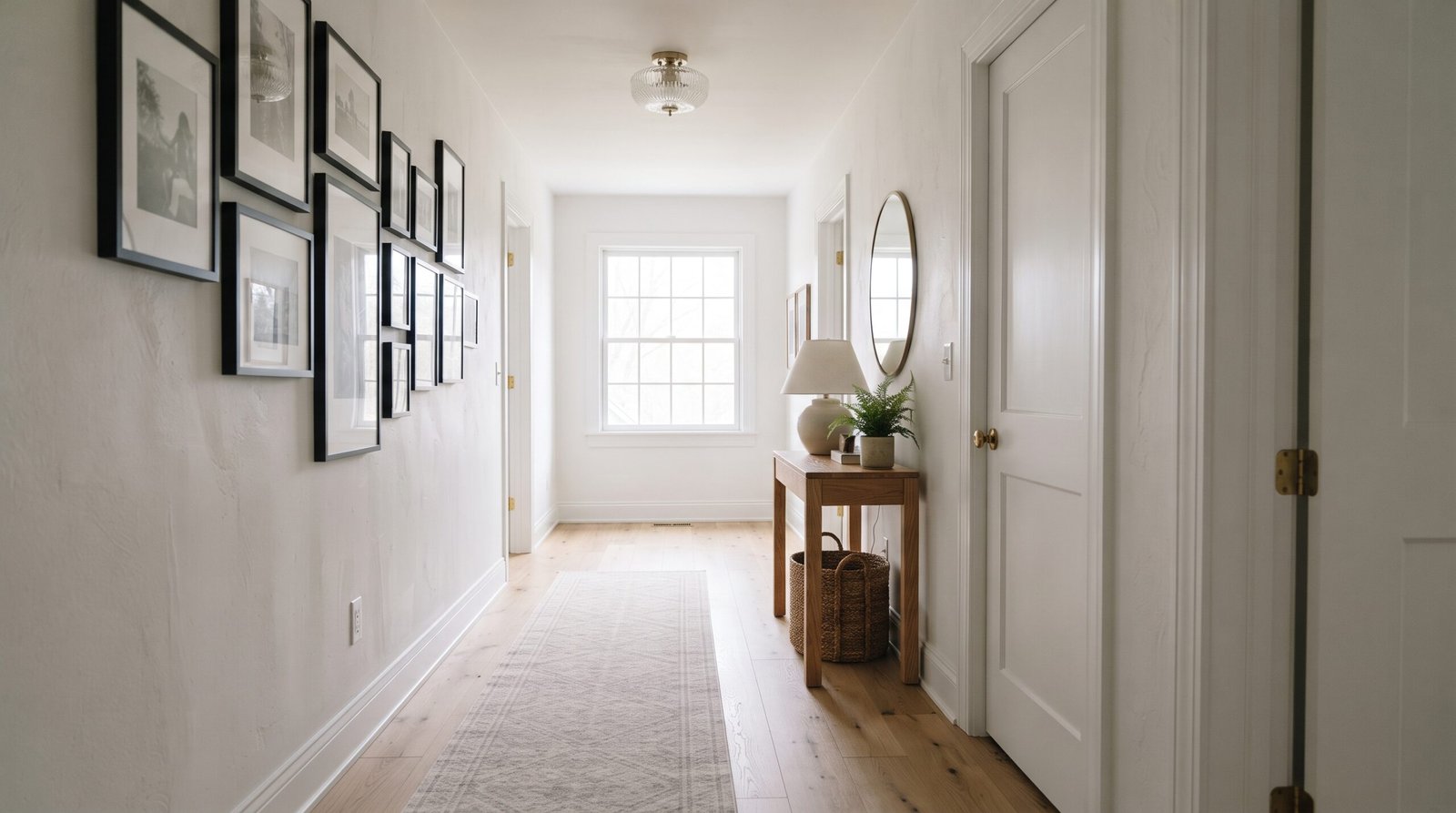
A gallery wall turns a plain hallway into a personal timeline, filled with framed photos, artwork, and mementos that tell a story as you walk past. Mixing frame sizes and finishes keeps the display feeling collected over time rather than staged all at once. It also gives guests a natural reason to slow down and look closer.
For a more polished look, keep the color palette of the frames consistent while allowing the artwork itself to vary in style and subject. This creates a sense of cohesion without feeling matchy or predictable. Even a small hallway can support a gallery wall if the arrangement is planned around the available wall space.
Statement Lighting Upstairs Hallway Ideas
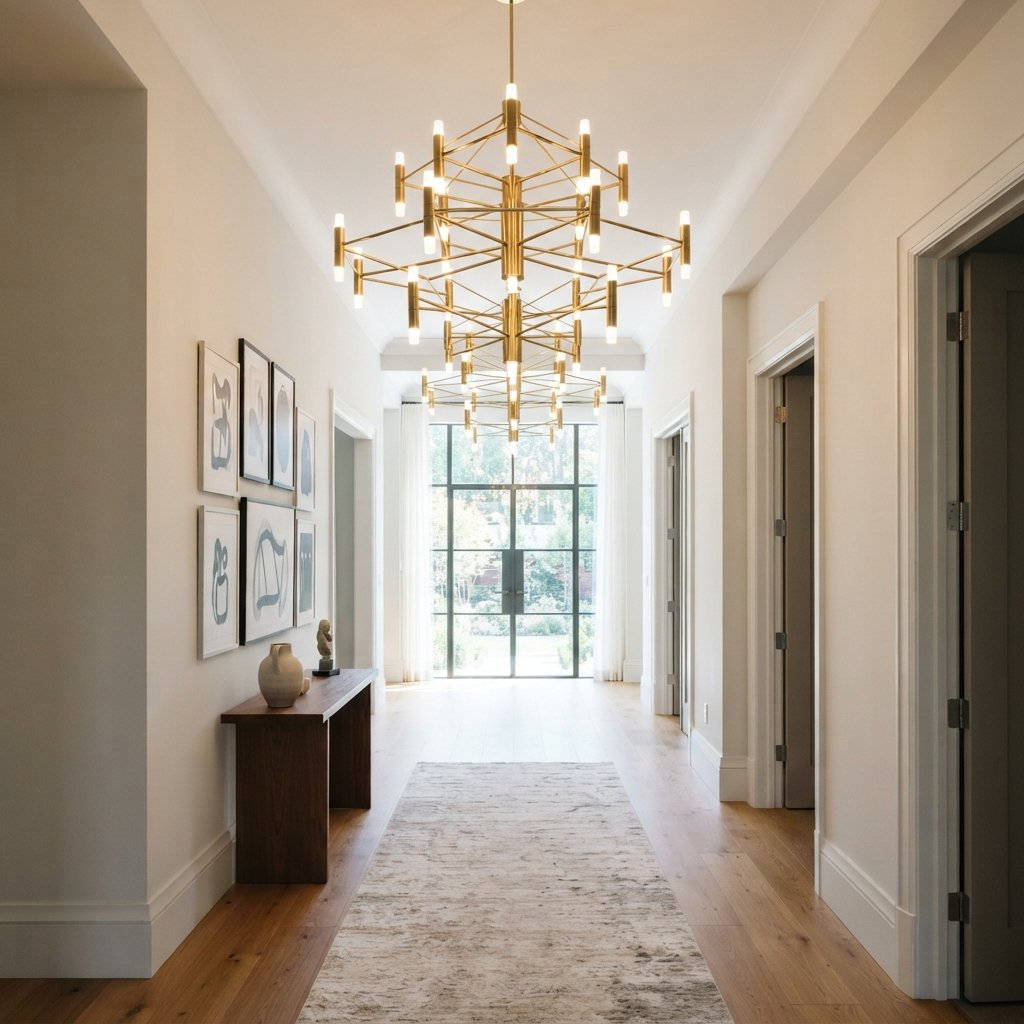
Hallways often rely on a single overhead fixture, but swapping that fixture for something with real personality can transform the entire feel of the space. A sculptural pendant, a row of small chandeliers, or an oversized lantern can turn a purely functional corridor into a design moment worth noticing. Lighting is one of the fastest ways to change the mood of a hallway without touching the walls or floor.
Layering in wall sconces alongside the main fixture also helps soften shadows and adds warmth during the evening hours. This combination gives the hallway a gentle glow rather than the flat, clinical light so many overhead bulbs produce. It is a small investment that makes a noticeable difference every single day.
Runner Rug Upstairs Hallway Idea
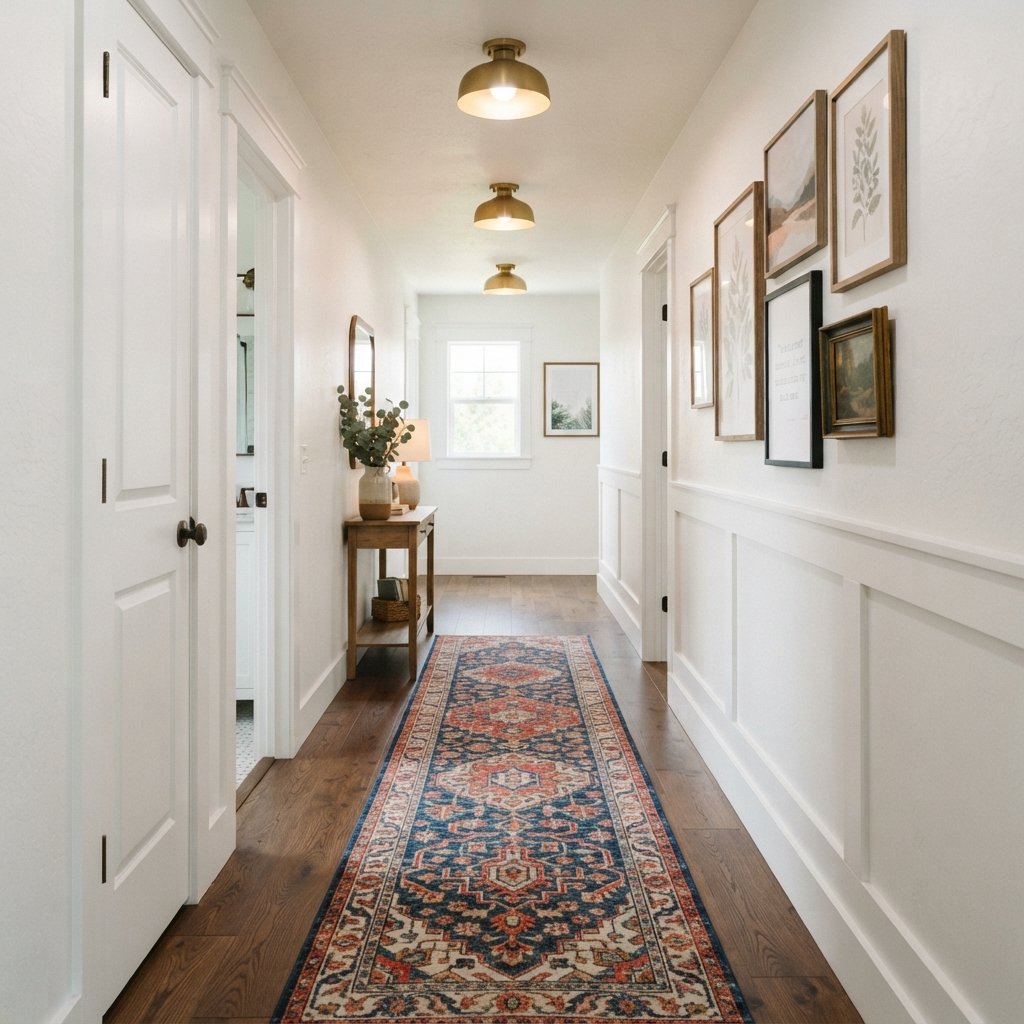
A well-chosen runner rug adds warmth, sound absorption, and a strong visual guide down the length of the hallway. Patterned runners work especially well in hallways with plain walls, since they introduce color and texture without requiring any painting or wallpapering. A long runner also helps define the walking path in open-plan upper floors.
Natural fiber runners bring in texture and a more relaxed, organic feel, while bold geometric patterns lean more contemporary. Either direction can anchor the whole hallway and tie together furniture or artwork placed along the walls. Choosing a rug with some depth of color also helps hide everyday foot traffic marks.
Read More: 30 Small Patio Decorating Ideas: That Feel Anything But Small
Accent Wall Color Upstairs Hallway Ideas
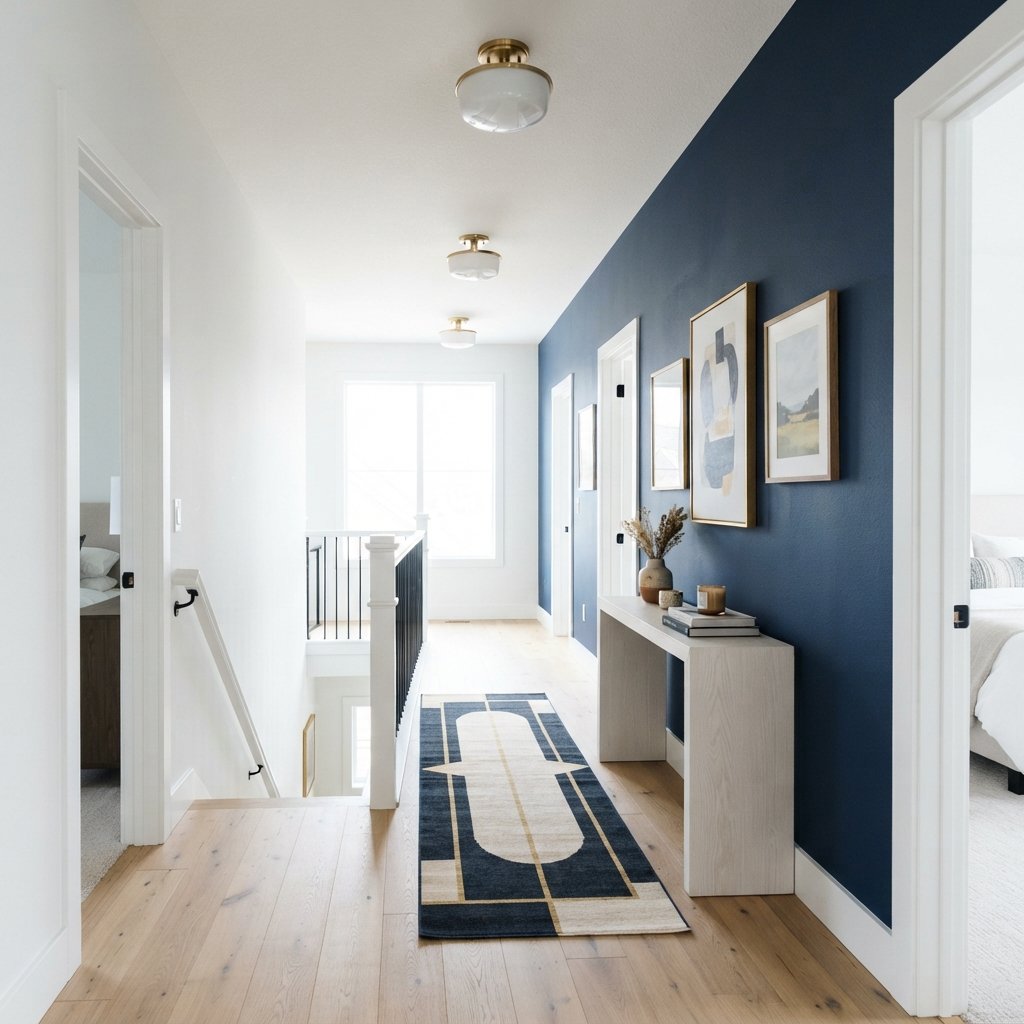
Painting a single accent wall is one of the simplest ways to add drama to a hallway without committing to a full color overhall. Deep jewel tones like emerald or navy create a cozy, enveloping feeling, especially in hallways that lack much natural light. Lighter, muted shades can still make a statement while keeping the space feeling airy.
Choosing an accent wall at the far end of the hallway, rather than along the side, draws the eye forward and makes the space feel more intentional. This technique also works well when paired with a piece of artwork or a mirror centered on that same wall. The result is a hallway that feels curated rather than accidental.
Built-In Bookshelf Upstairs Hallway Ideas
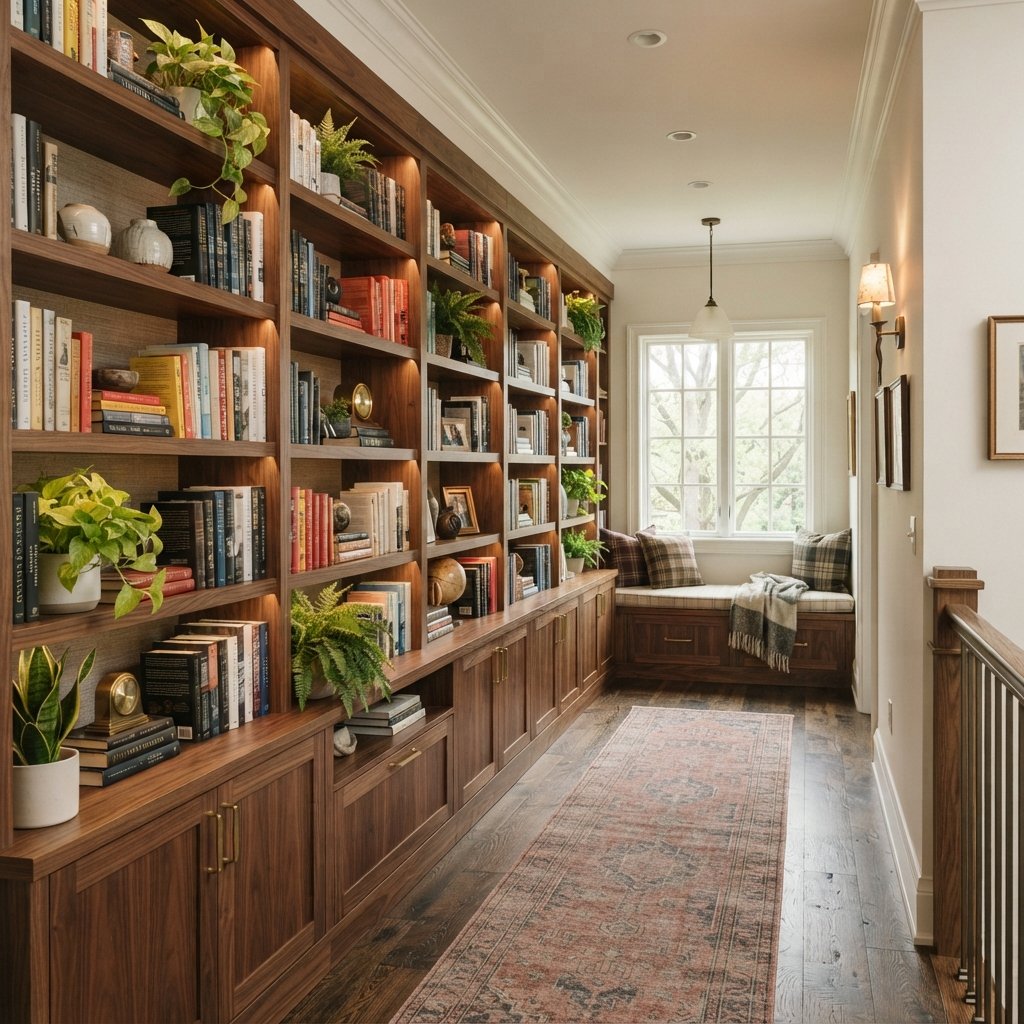
If the hallway has any extra depth or an awkward alcove, a built-in bookshelf can turn wasted space into a genuinely useful feature. Floor-to-ceiling shelving filled with books, framed photos, and small decorative objects gives the hallway a lived-in, personal quality. It also adds valuable storage in homes where closet space is limited.
Built-ins can be painted to match the surrounding walls for a seamless look, or finished in a contrasting wood tone to stand out as a feature. Either approach makes the most of vertical space that would otherwise sit empty. A well-styled shelf also gives visitors something interesting to browse as they pass through.
Window Seat Upstairs Hallway Ideas
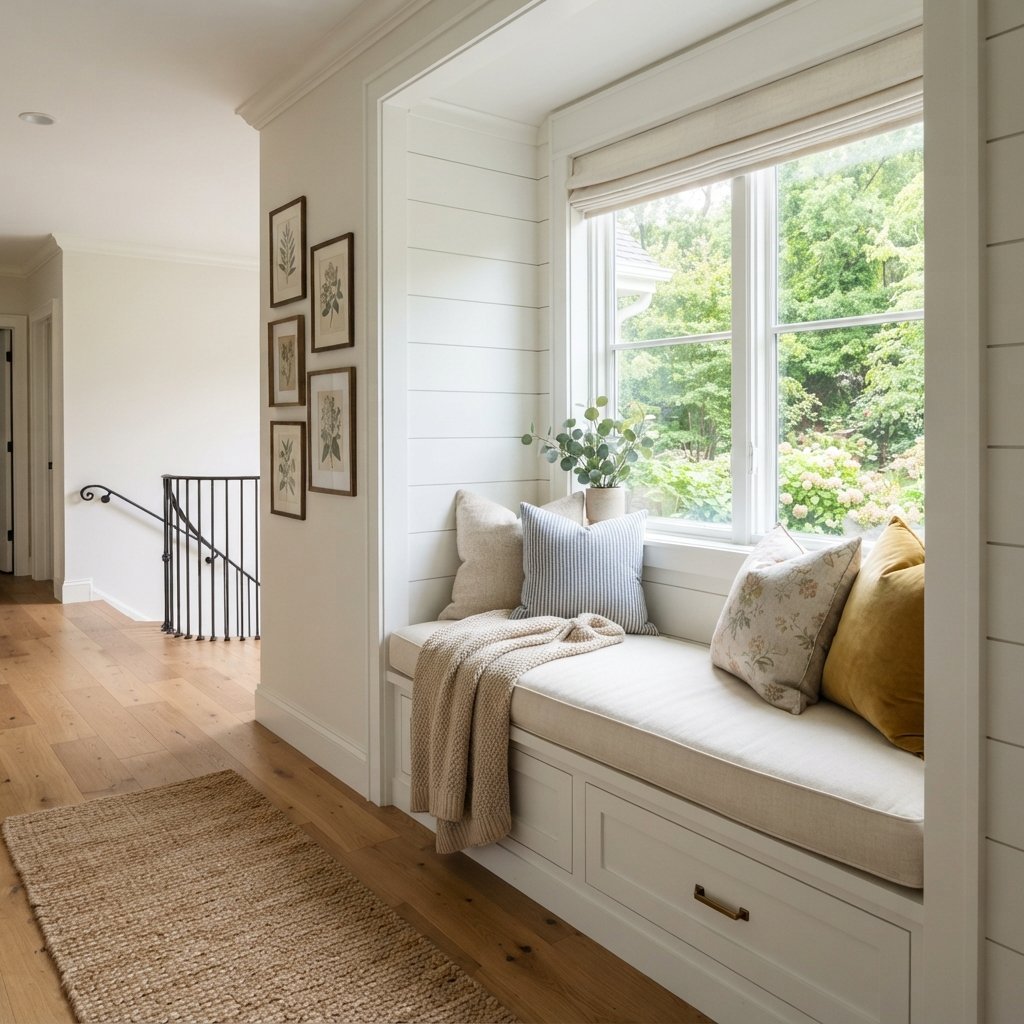
Hallways with a window at the end are perfect candidates for a built-in window seat, turning a transitional space into a place worth lingering. Adding cushions and a few throw pillows makes the nook inviting for reading or simply pausing for a moment of quiet. It is a small architectural gesture that adds enormous charm.
Underneath the seat, drawers or lift-up storage can hold linens, seasonal items, or anything else that needs a home. This dual-purpose design keeps the hallway functional while still feeling like a retreat. Even a narrow window seat can become a favorite corner of the house.
Wallpaper Pattern Upstairs Hallway Ideas
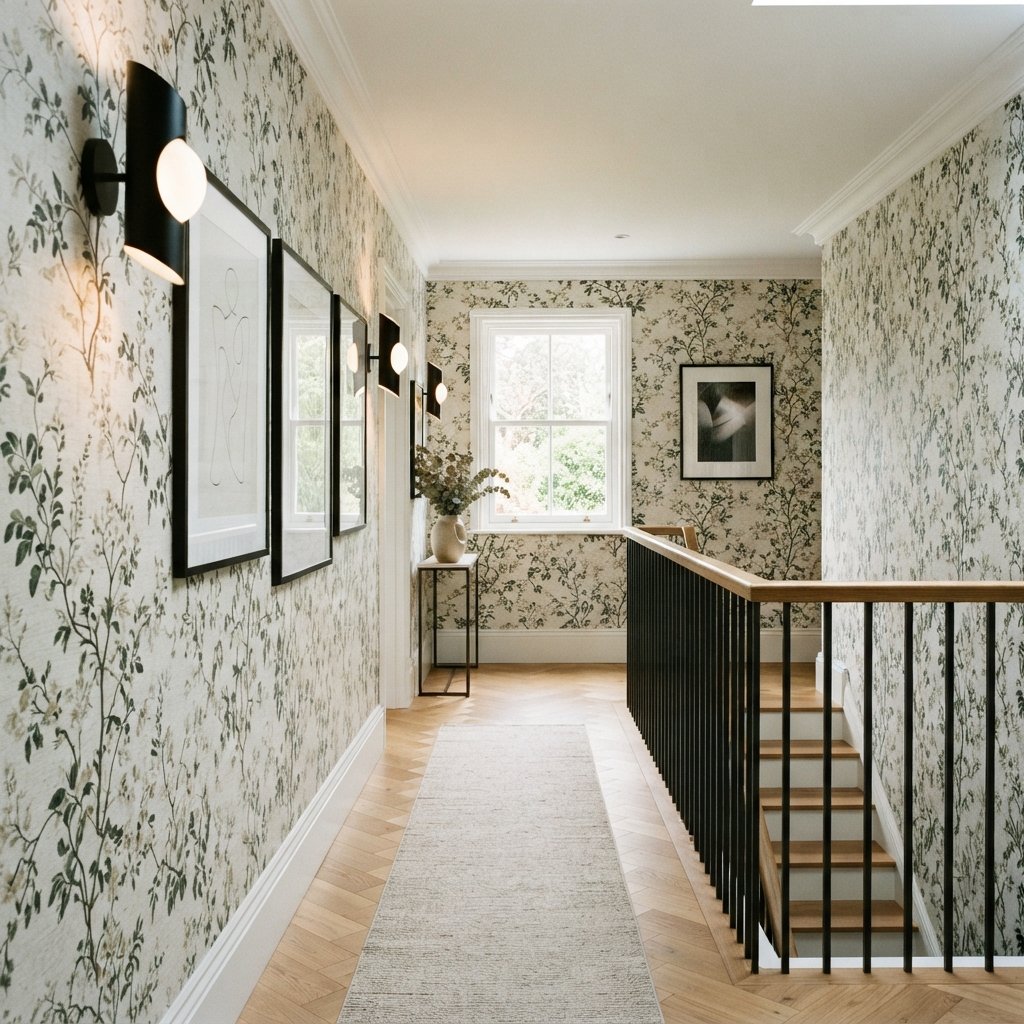
Wallpaper is having a major moment in hallway design, and for good reason, since it can completely transform a plain corridor in an afternoon. Bold botanical prints, geometric patterns, or vintage-inspired motifs all bring energy to a space that might otherwise be overlooked. A hallway is also a low-risk place to experiment with a pattern that feels too bold for a larger room.
Because hallways are often viewed only in passing, a busier wallpaper pattern tends to read as playful rather than overwhelming. Pairing patterned wallpaper with simple, neutral trim keeps the overall look balanced. This is one of the easiest upgrades for anyone wanting a dramatic before-and-after.
Floating Shelf Upstairs Hallway Ideas
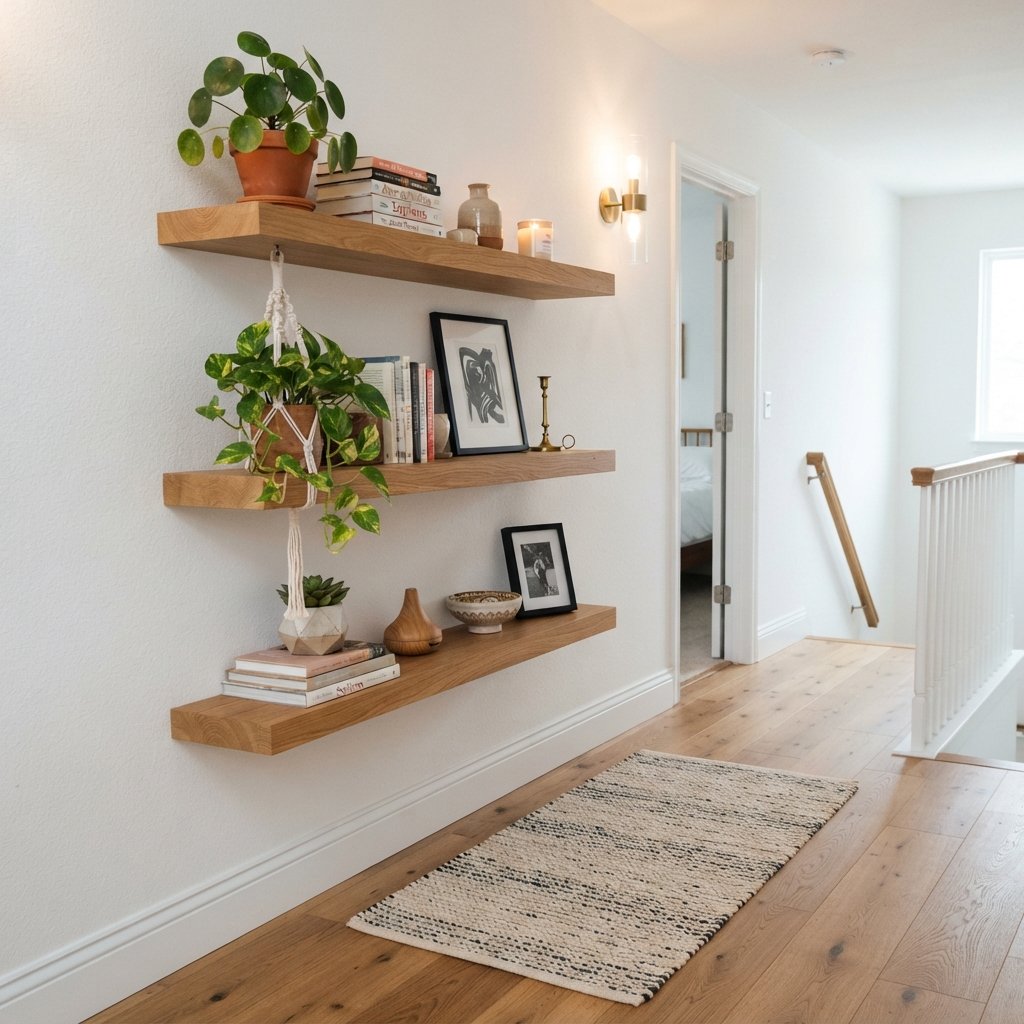
Floating shelves offer a clean, modern way to display books, plants, or small art pieces without taking up any floor space. Installed at varying heights, they add visual rhythm to a long, straight hallway that might otherwise feel monotonous. This approach works particularly well in narrow spaces where furniture simply will not fit.
Styling floating shelves with a mix of heights and textures, such as a stack of books next to a small plant, keeps the display feeling natural rather than overly staged. Rotating the items seasonally also gives the hallway a refreshed look throughout the year. It is an easy, low-commitment way to bring personality into the space.
Family Photo Display Upstairs Hallway Ideas
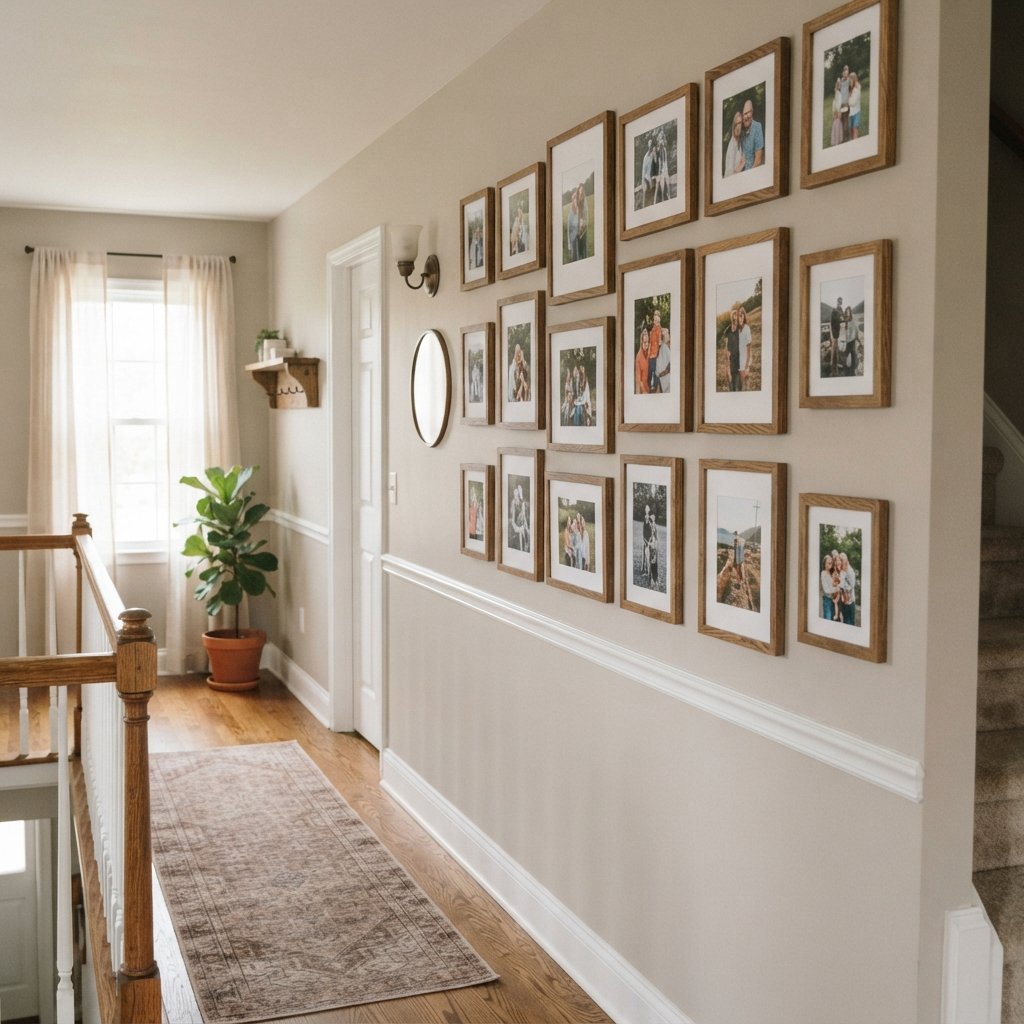
A dedicated photo display turns the upstairs hallway into a warm, personal gallery that guests and family members walk past every day. Arranging photos chronologically along the wall can create a subtle timeline of family milestones and memories. This kind of display adds emotional warmth that generic artwork simply cannot replicate.
Uniform frames in a single finish, like matte black or brushed brass, keep the display feeling intentional even when the photos themselves vary widely in size and color. Grouping smaller frames closer together and leaving larger frames more spaced out adds visual interest. It is one of the most meaningful upgrades a hallway can receive.
Vintage Mirror Upstairs Hallway Ideas

A vintage mirror hung at the end of a hallway does double duty, adding character while also bouncing light down the corridor. Ornate gold frames bring in a touch of old-world elegance, while a simple weathered wood frame leans more rustic. Either way, a mirror instantly makes a narrow hallway feel more open.
Placing the mirror across from a window or light source maximizes its brightening effect throughout the day. Smaller vintage mirrors can also be grouped together in a cluster for a more eclectic, collected look. This is a particularly effective solution for hallways that feel dim or closed in.
Skylight Upstairs Hallway Ideas
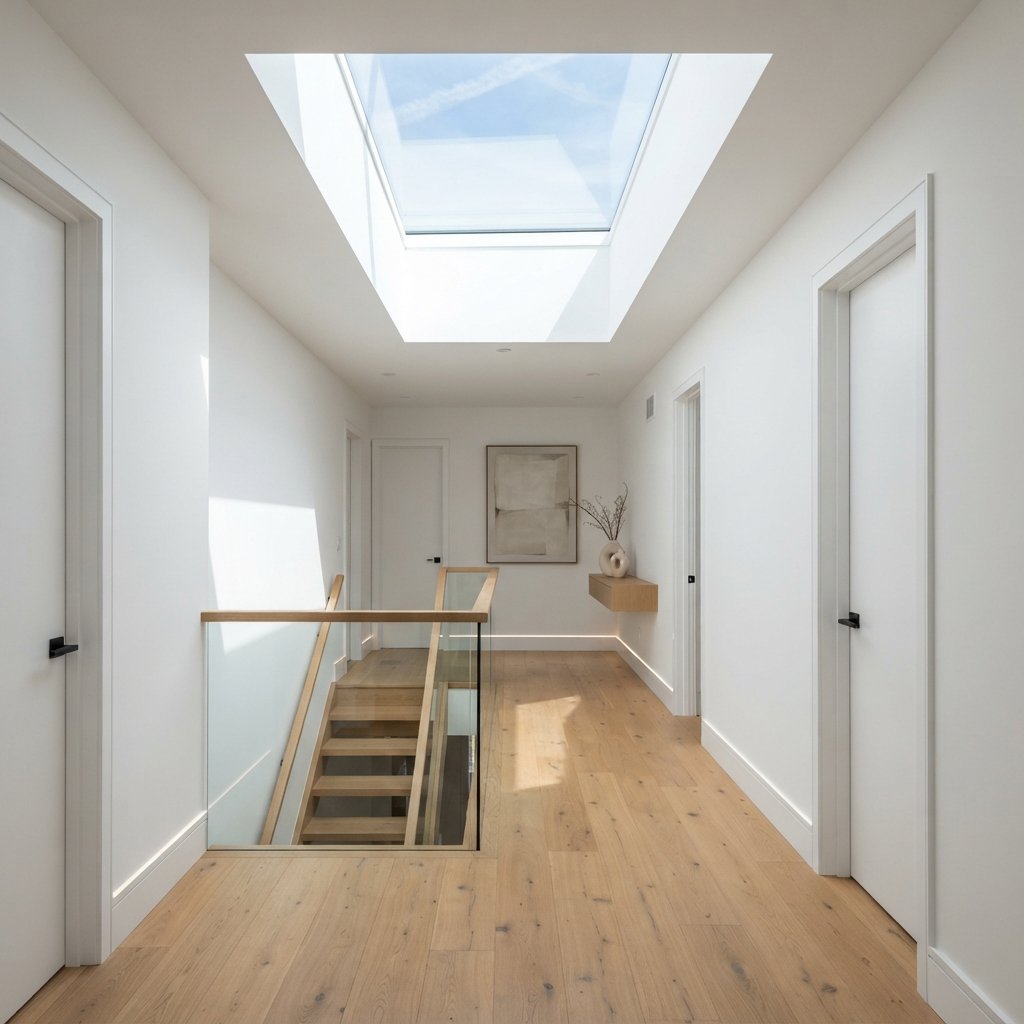
For upstairs hallways directly beneath the roofline, adding a skylight can completely change the atmosphere of the space by flooding it with natural daylight. Even a small skylight makes a noticeable difference in hallways that previously relied entirely on artificial lighting. This upgrade works especially well in older homes where hallway windows were never part of the original layout.
Pairing a skylight with lighter wall colors amplifies the effect even further, helping the daylight bounce and spread throughout the corridor. On sunny days, the hallway can feel almost like an extension of the outdoors. It is a bigger investment, but one that pays off in daily comfort.
Ceiling Beam Upstairs Hallway Ideas
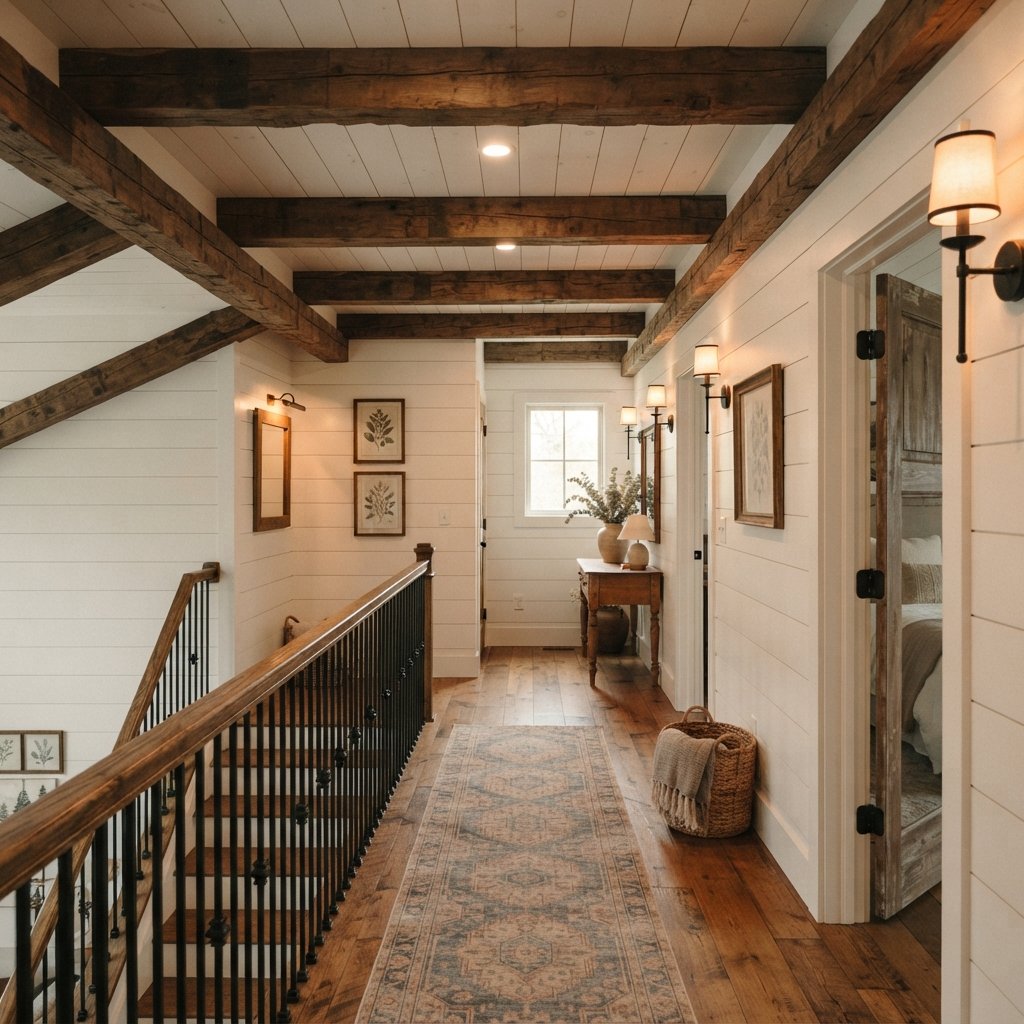
Exposed or added ceiling beams bring architectural character to a hallway that might otherwise feel flat and undefined. Painted a contrasting dark tone against a white ceiling, beams draw the eye upward and add a sense of structure to the space. This works particularly well in hallways with higher ceilings.
Beams can also be a practical solution for hiding wiring or structural elements while still contributing to the overall design. In older homes, exposed original beams can be restored and highlighted rather than covered up. Either way, this detail adds a sense of craftsmanship to the hallway.
Wall Sconce Upstairs Hallway Ideas
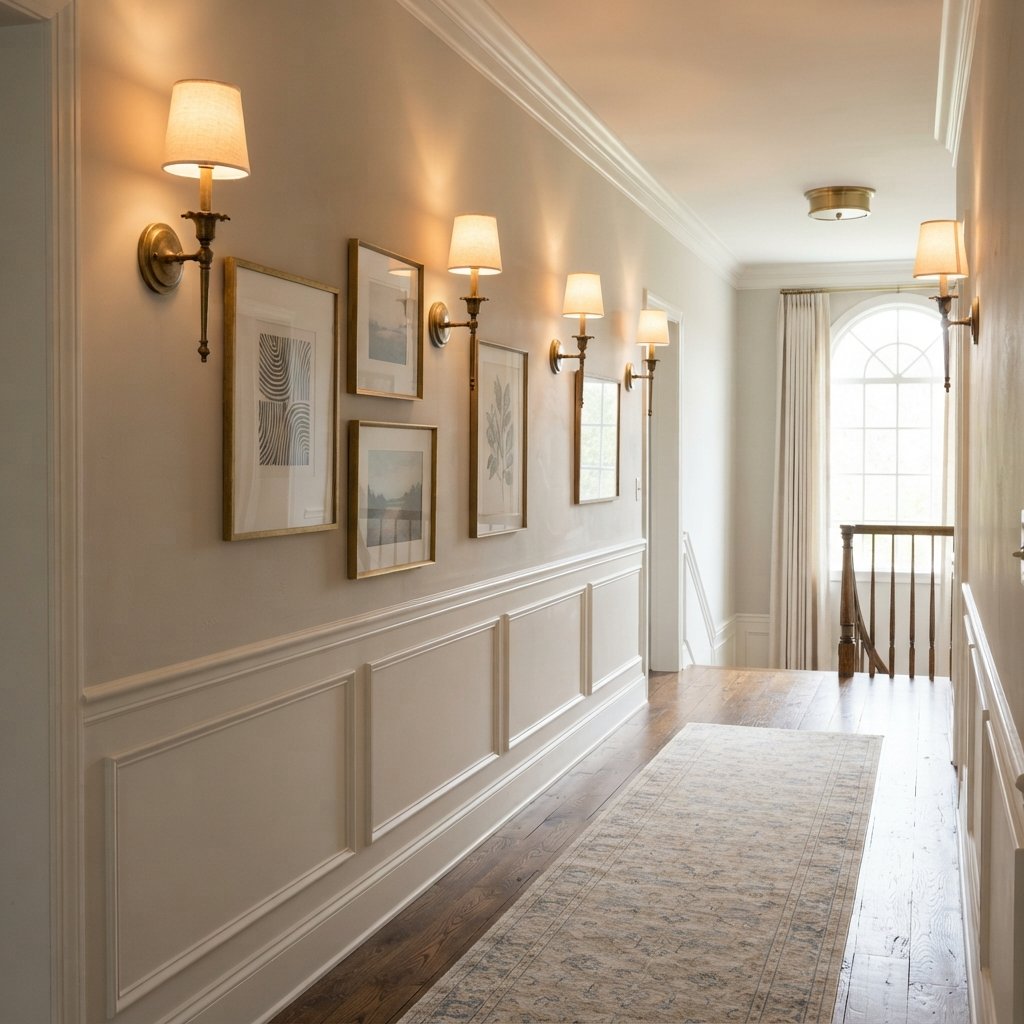
Wall sconces spaced evenly along a hallway create a soft, rhythmic pattern of light that feels far more inviting than a single overhead bulb. They also free up ceiling space for other design elements, like beams or skylights, since the lighting comes from the walls instead. This layered lighting approach adds depth and warmth to the entire corridor.
Choosing sconces with dimmable bulbs allows the hallway to shift from bright and functional during the day to soft and cozy in the evening. Brass or matte black finishes tend to complement most color palettes without feeling dated. This small addition makes a big difference in how the hallway feels after dark.
Bench Seating Upstairs Hallway Ideas
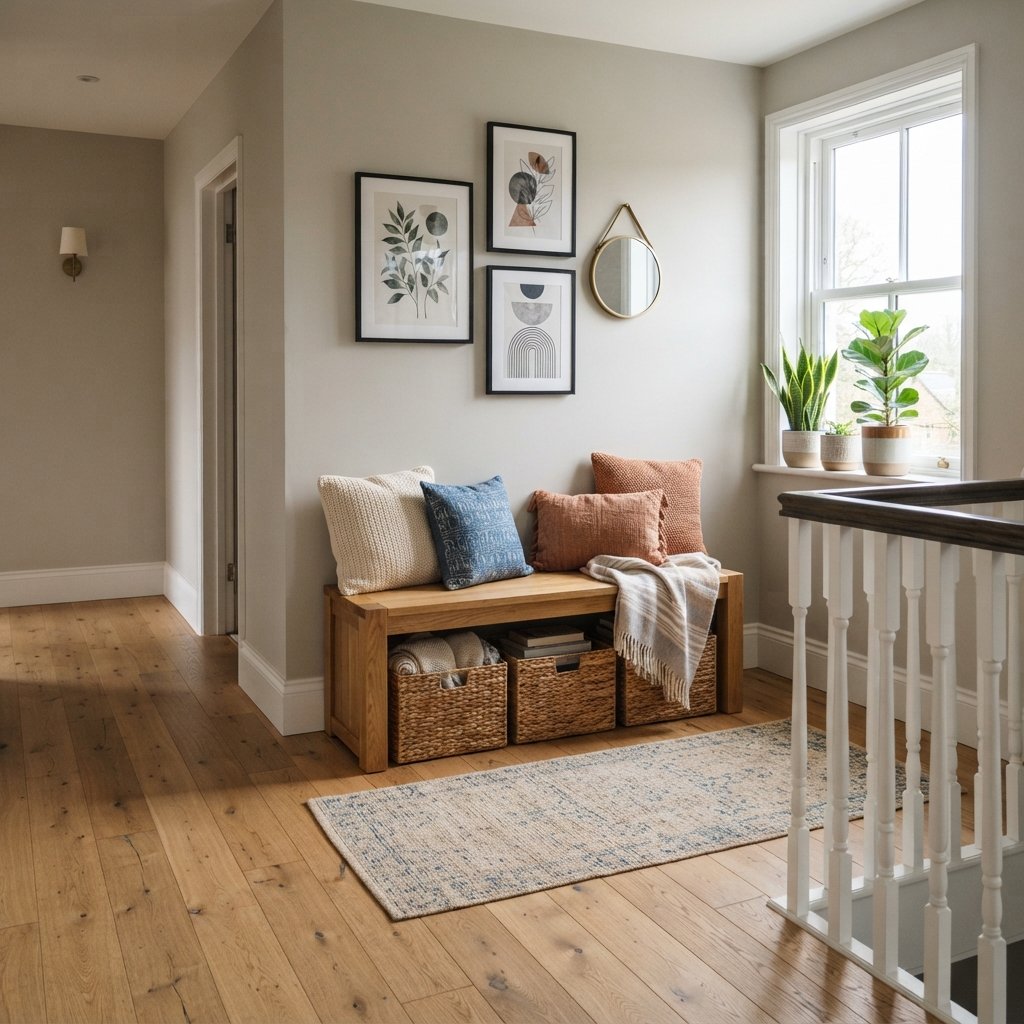
A slim bench placed along one wall of the hallway adds function without crowding the walking path. It becomes a spot to sit while putting on shoes, or simply a place to set down bags for a moment. In hallways with limited furniture options, a bench is often the most practical addition.
Choosing a bench with hidden storage underneath adds even more value, giving a home for shoes, blankets, or seasonal items. Upholstered benches soften the look of the hallway, while wooden benches lean more rustic or traditional. Either style adds a welcoming touch to the space.
Reading Nook Upstairs Hallway Ideas
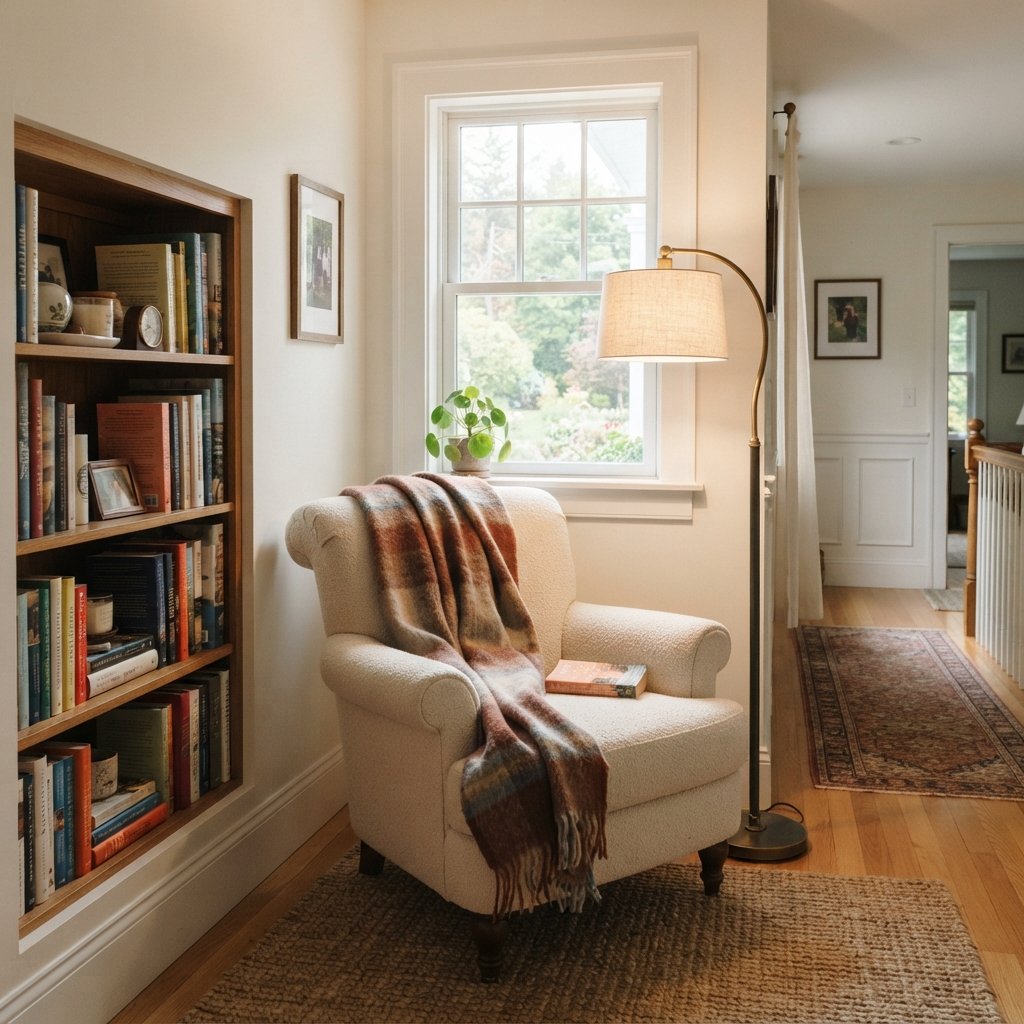
If the upstairs hallway has any extra width or a quiet corner, transforming it into a small reading nook makes the most of otherwise unused space. A comfortable chair, a small side table, and a reading lamp are often all it takes to create a cozy retreat. This kind of nook gives the hallway a genuine purpose beyond simply connecting rooms.
Adding a few shelves nearby for books keeps everything within easy reach and reinforces the nook as an intentional design feature. Soft textiles, like a throw blanket or a patterned cushion, add comfort and visual warmth. Even a compact nook can become one of the most-used corners in the house.
Art Print Display Upstairs Hallway Ideas
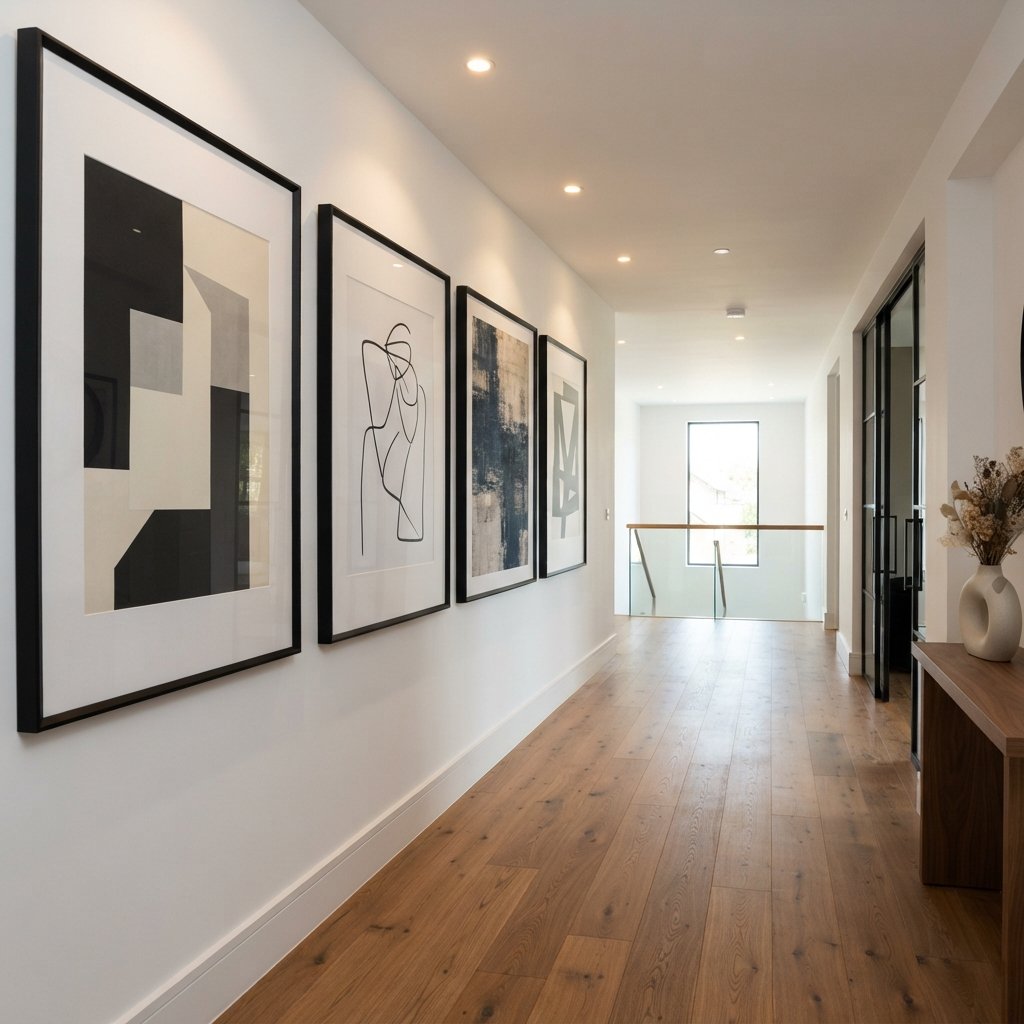
Curated art prints bring color, movement, and personality to a hallway without requiring a full renovation. Choosing a cohesive theme, such as botanical prints or abstract shapes, keeps the display feeling intentional even when the pieces come from different sources. This approach works beautifully in both modern and traditional homes.
Mixing print sizes and spacing them evenly along the wall creates a sense of rhythm as you walk the length of the hallway. Rotating prints seasonally or as your taste evolves keeps the space feeling fresh over time. It is one of the most flexible and affordable upgrades on this list.
Console Table Upstairs Hallway Ideas
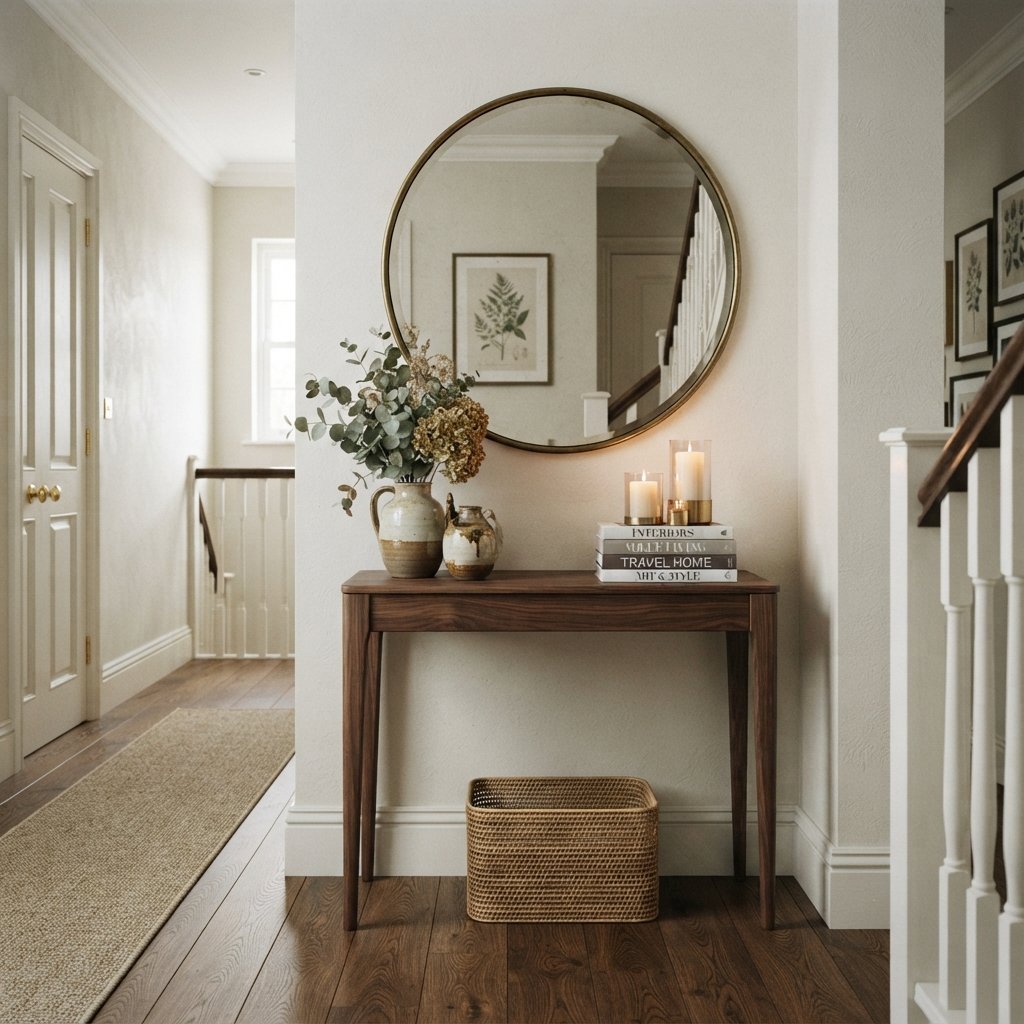
A slim console table placed against one wall adds both function and style to a hallway, offering a spot for keys, mail, or a small vase of flowers. Choosing a table with a narrow profile ensures it does not interfere with the walking path, even in tighter hallways. This piece of furniture often becomes the anchor for the rest of the decor.
Styling the console table with a lamp, a stack of books, and a small piece of art creates a vignette that feels intentional rather than cluttered. A table with drawers adds hidden storage for everyday items that would otherwise pile up. It is a simple addition with a big visual payoff.
Board and Batten Upstairs Hallway Ideas
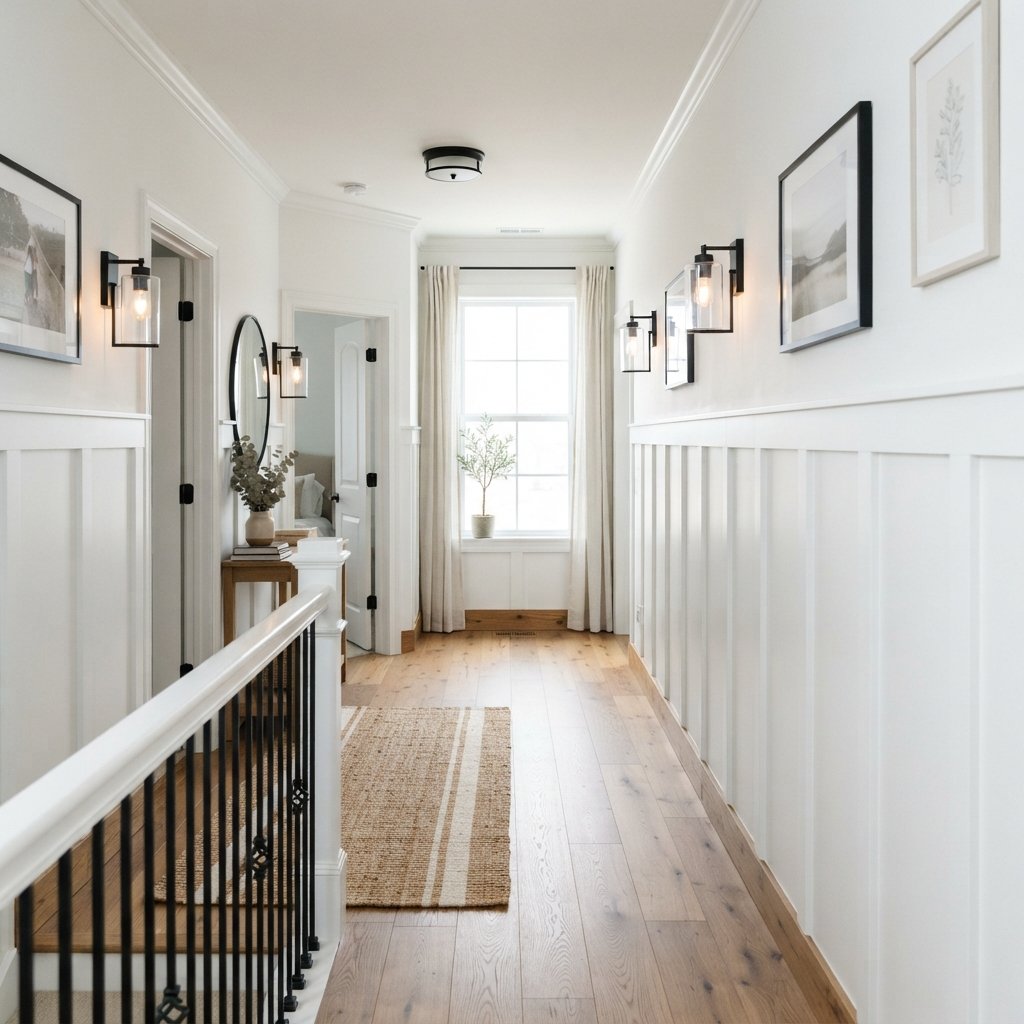
Board and batten trim adds texture and architectural interest to hallway walls, especially when paired with a fresh coat of paint. This treatment works well on the lower half of the wall, creating a classic, tailored look that pairs nicely with both traditional and modern furnishings. It also helps protect walls from scuffs in high-traffic areas.
Painting the board and batten in a color that contrasts subtly with the upper wall adds depth without overwhelming the space. This detail is especially effective in hallways that feel plain or under-designed. It is a relatively simple carpentry project with a noticeably elevated result.
Textured Wallpaper Upstairs Hallway Ideas
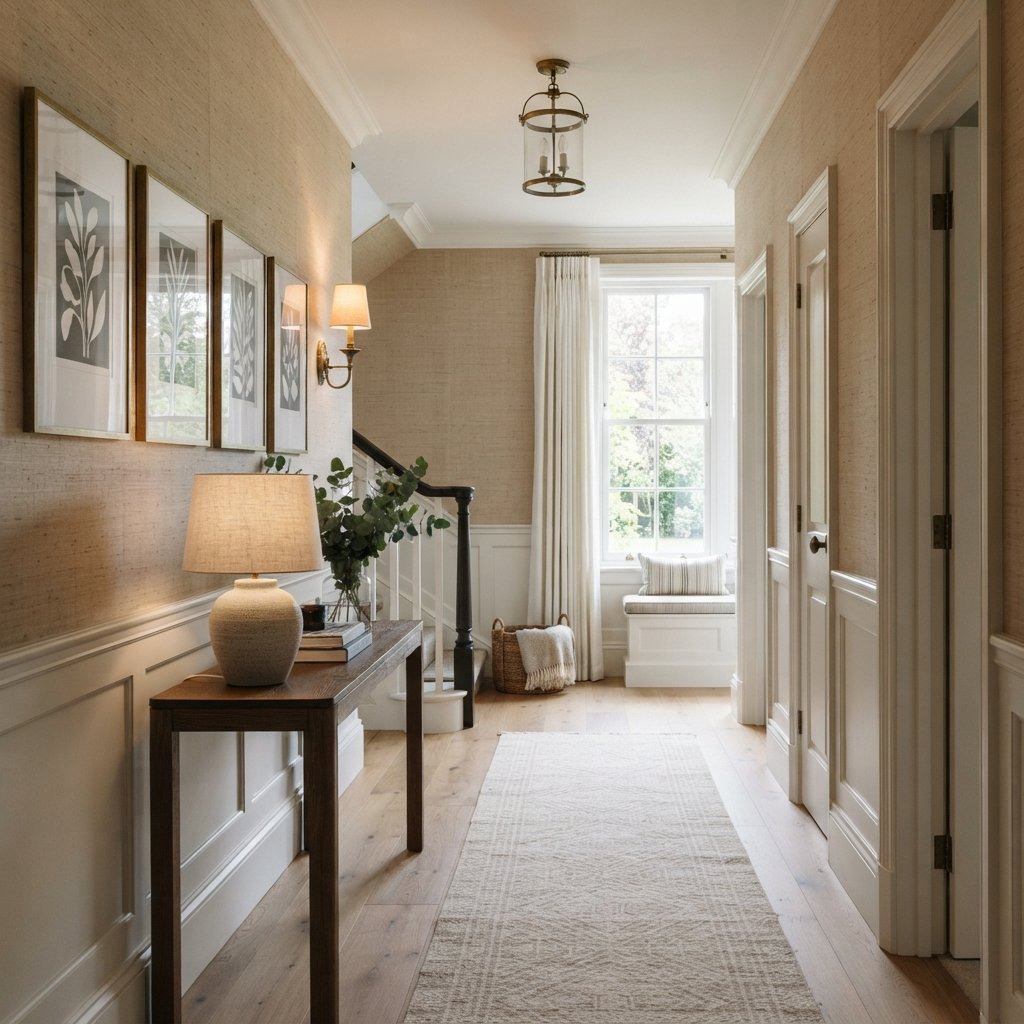
Beyond bold patterns, textured wallpaper offers a more subtle way to add dimension to hallway walls. Grasscloth, linen-look, or embossed designs catch the light differently throughout the day, giving the hallway a quiet richness. This option works particularly well for those who want visual interest without a strong pattern.
Textured wallpaper also does an excellent job of hiding minor wall imperfections, which is especially useful in older homes. Paired with simple, unfussy decor, it lets the wall finish itself become the star of the space. It is a more understated alternative to bold prints, but no less impactful.
Hidden Storage Upstairs Hallway Ideas
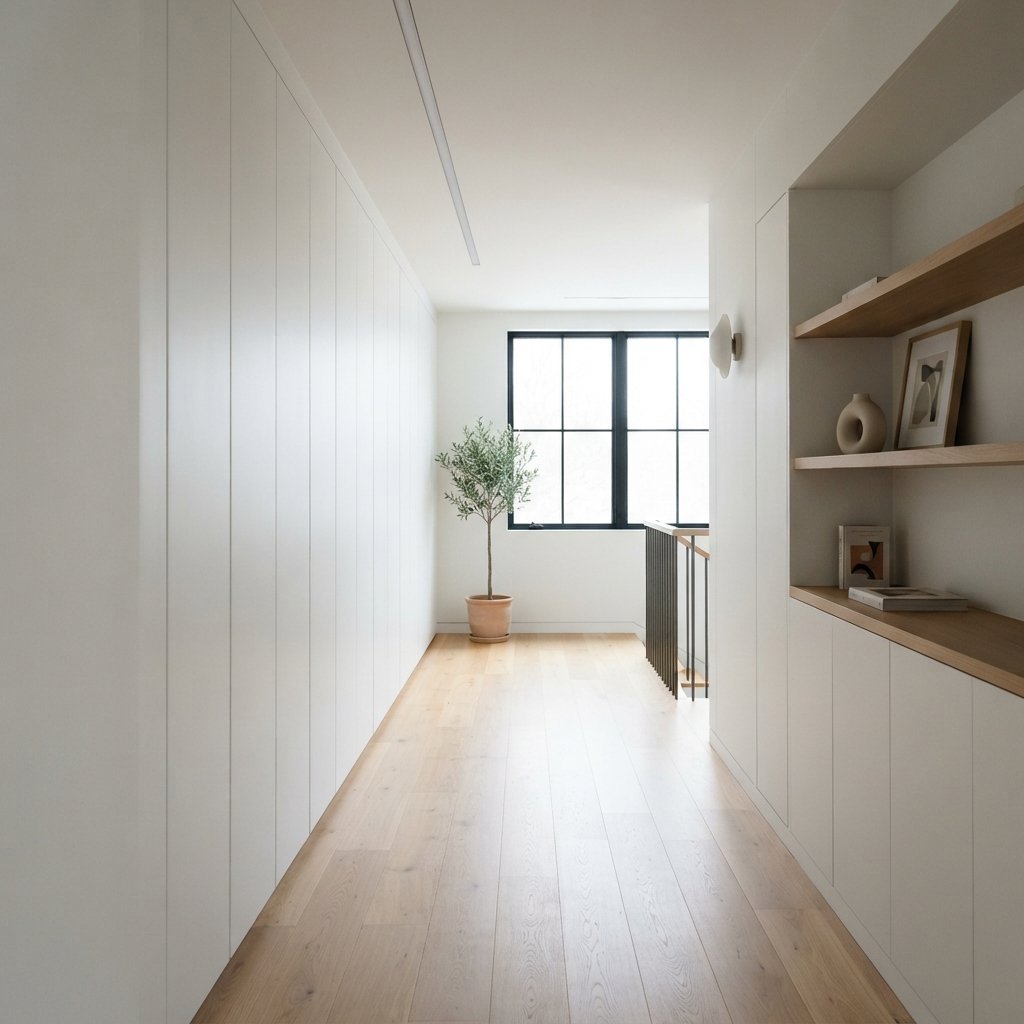
Upstairs hallways often have unused nooks, awkward corners, or space beneath stairs that can be converted into hidden storage. Built-in cabinets disguised as paneling keep the hallway looking clean while quietly holding linens, seasonal decor, or cleaning supplies. This approach is especially valuable in homes with limited closet space.
Even small solutions, like a slim cabinet tucked behind a door, can make a meaningful difference in how organized the upstairs feels. Hidden storage keeps the hallway free of clutter while still maximizing every available inch. It is a practical upgrade that pays off daily.
Plant Display Upstairs Hallway Ideas
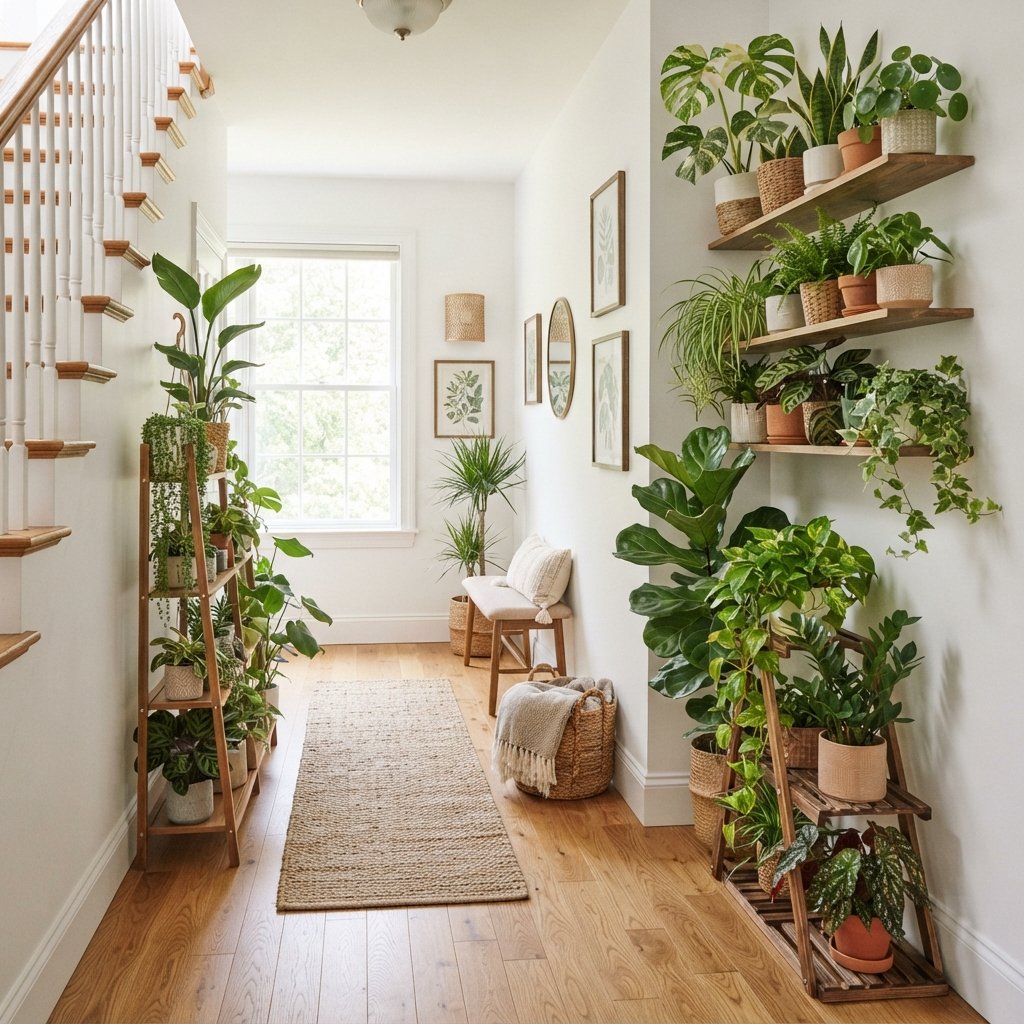
Bringing greenery into the hallway adds life and softness to a space that can otherwise feel sterile. Low-light tolerant plants work especially well in hallways without much natural light, while a nearby window allows for a wider variety of greenery. Even a single well-placed plant can change the entire feel of the corridor.
Grouping plants of varying heights on a narrow shelf or stand creates a mini indoor garden effect. Trailing plants placed on a high shelf add movement and softness as their leaves cascade downward. This is one of the most affordable and easily updated ideas on this list.
Neutral Palette Upstairs Hallway Ideas
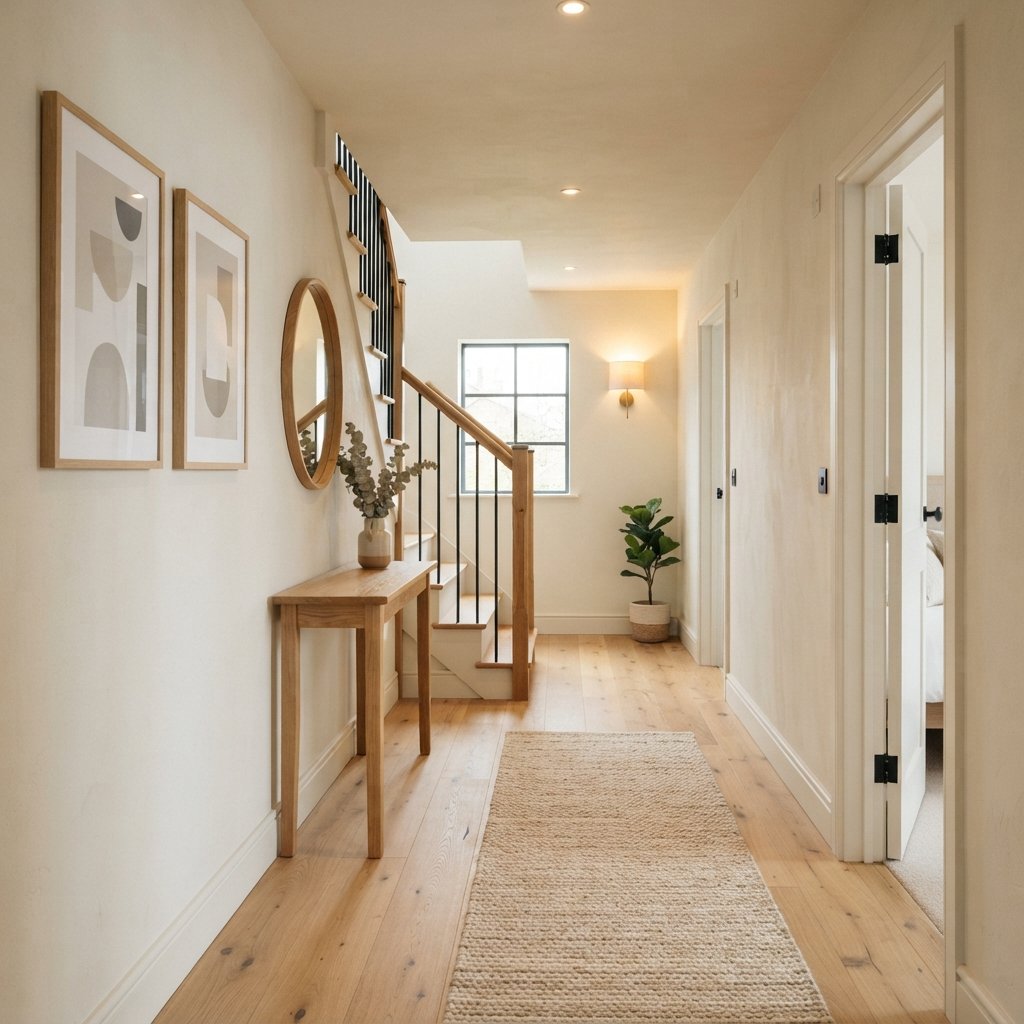
A neutral color palette keeps the hallway feeling calm, cohesive, and connected to the rest of the home. Soft whites, warm greiges, and gentle taupes create a quiet backdrop that lets artwork, lighting, and furniture take center stage. This approach works particularly well in smaller hallways where a bold color might feel overwhelming.
Layering different textures within a neutral scheme, such as a woven rug or a linen runner, keeps the space from feeling flat. Neutral hallways also tend to age well, avoiding the need for frequent repainting as trends shift. It is a timeless, low-maintenance direction for anyone unsure where to start.
Bold Pattern Upstairs Hallway Ideas
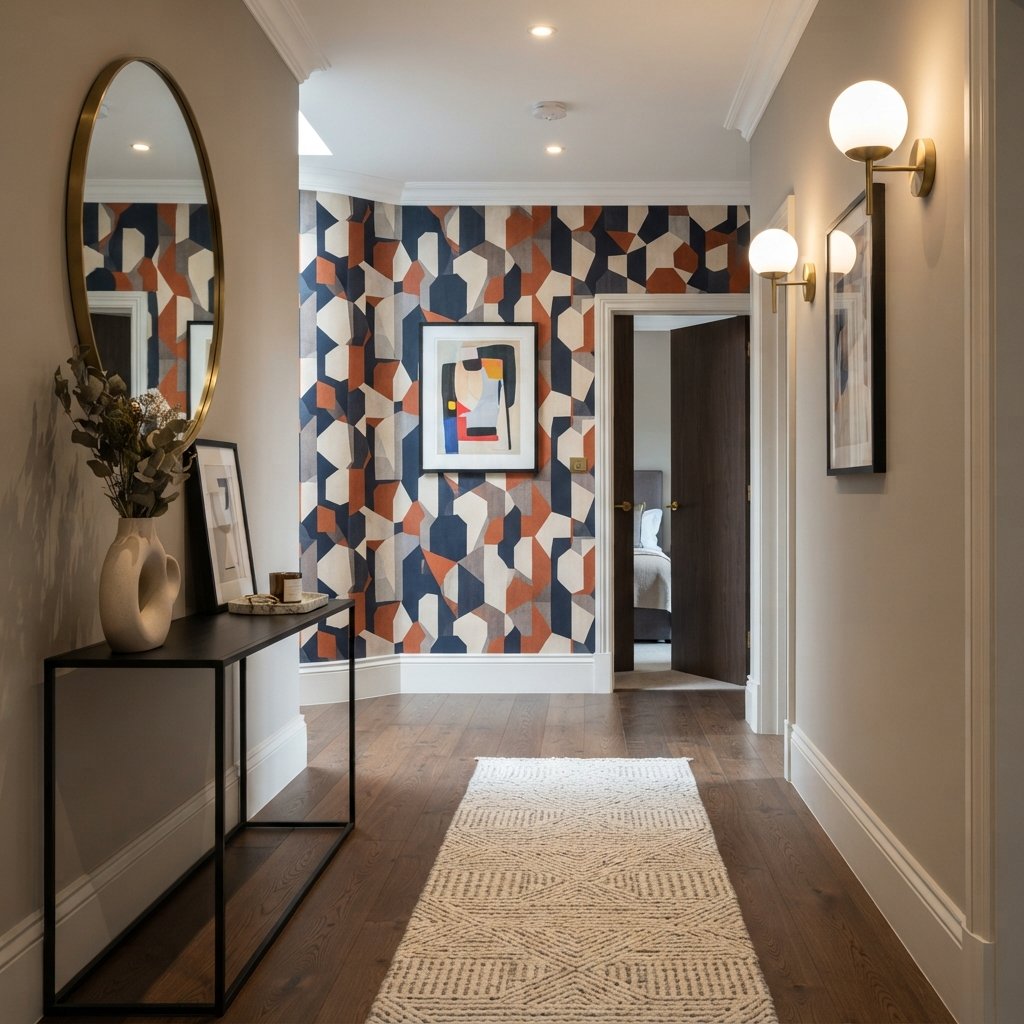
For those drawn to more daring design choices, a bold pattern on the floor or walls can turn the hallway into a memorable focal point. Striking geometric tile, a graphic runner, or a boldly patterned wallpaper all bring instant personality to the space. Because hallways are typically viewed only briefly, they are an ideal place to experiment with pattern.
Balancing a bold pattern with simpler furnishings elsewhere in the hallway keeps the overall look from feeling too busy. This contrast allows the pattern to shine without competing with too many other elements. It is a confident choice that pays off in visual impact.
Antique Rug Upstairs Hallway Ideas
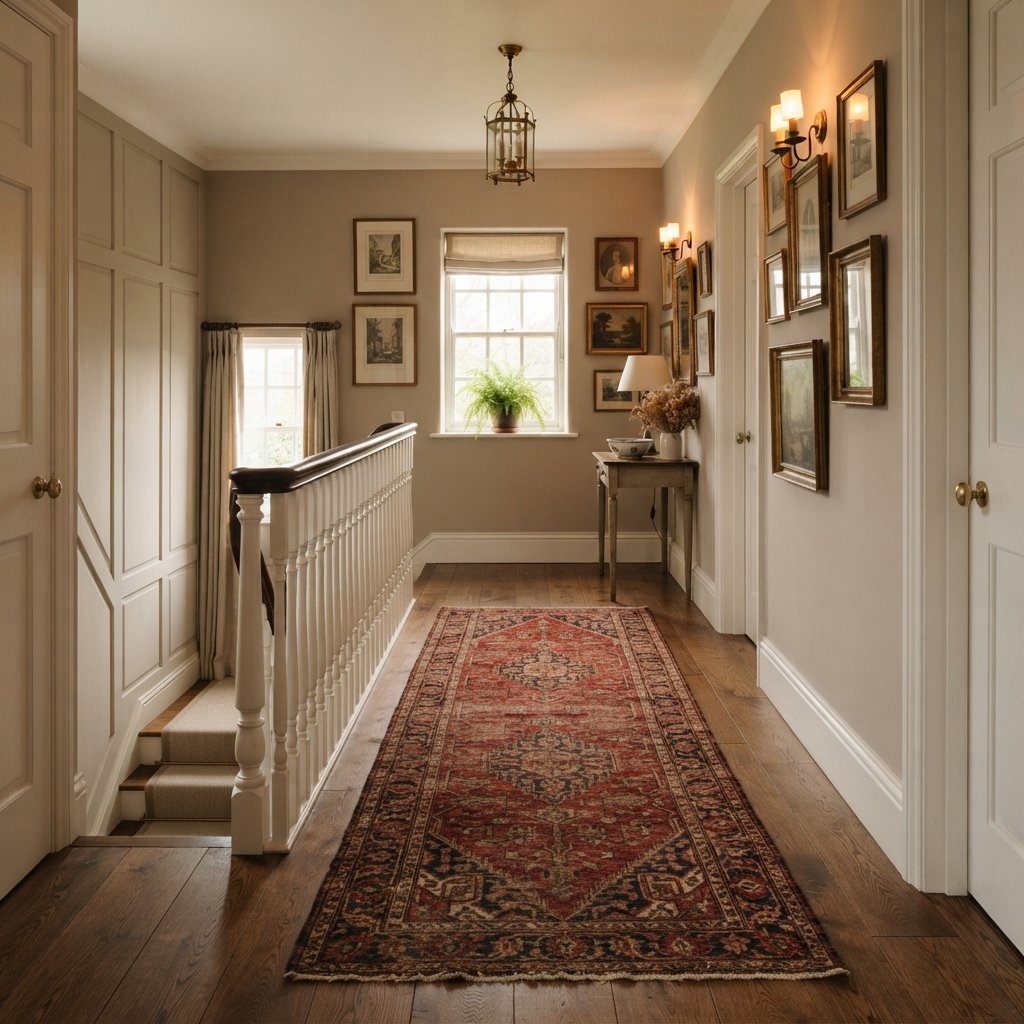
An antique or vintage-style rug brings warmth, history, and a sense of character to an upstairs hallway. The faded, muted tones typical of antique rugs pair beautifully with both modern and traditional interiors, adding depth without feeling overly formal. This kind of rug often becomes a conversation piece in its own right.
Layering an antique runner over a neutral floor helps ground the hallway and ties together other design elements like artwork or lighting. Because these rugs already carry a worn-in look, they also tend to hide everyday wear more gracefully than newer options. It is a beautiful way to add old-world charm.
Ceiling Light Fixture Ideas
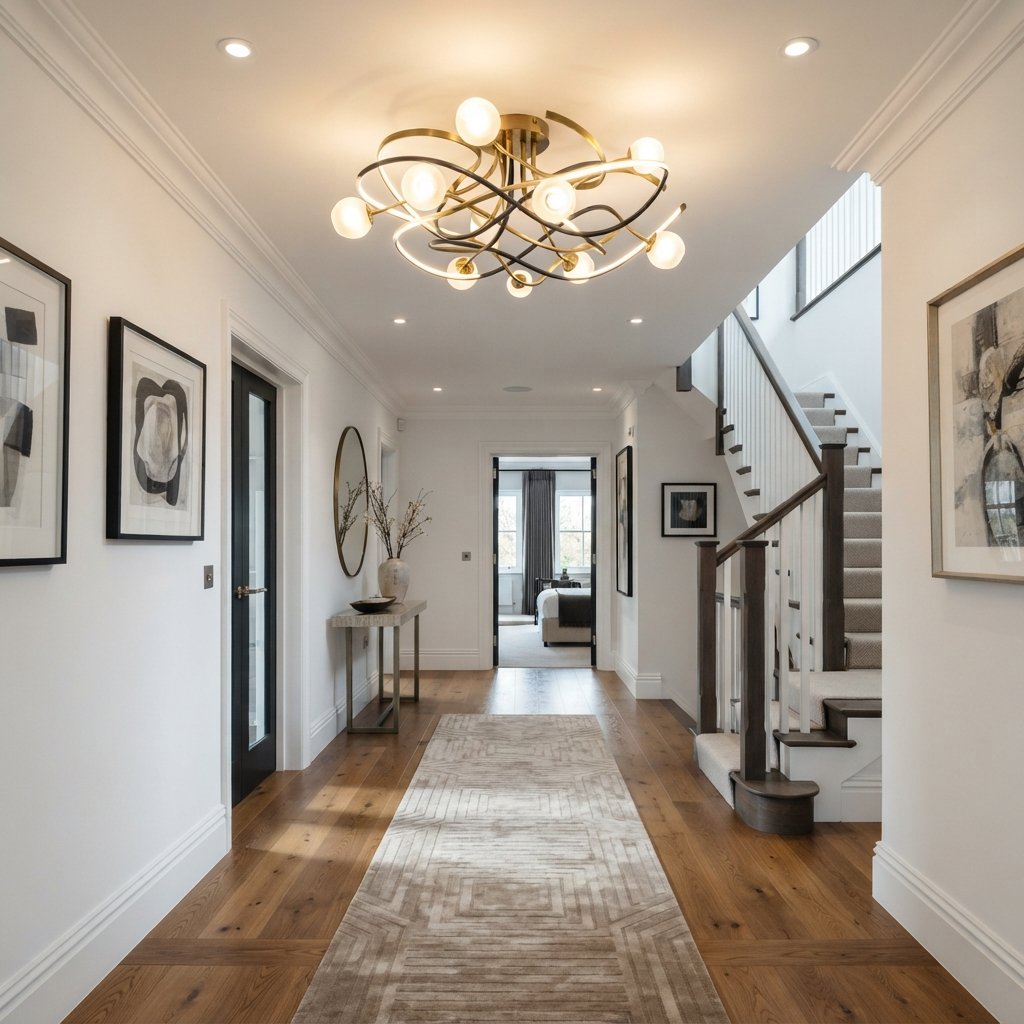
Upgrading the ceiling light fixture is one of the most straightforward ways to elevate the look of a hallway. A flush-mount fixture with an interesting shape or finish adds personality without taking up headroom, which matters in hallways with lower ceilings. Even a modest upgrade here can shift the entire tone of the space.
Choosing a fixture that echoes the finish of other hardware in the home, like door handles or faucet fixtures, helps create a sense of continuity throughout the upstairs level. Warm-toned bulbs also make the hallway feel more inviting than the cooler light many builder-grade fixtures produce. It is a small change with an outsized visual return.
Wall Molding Ideas
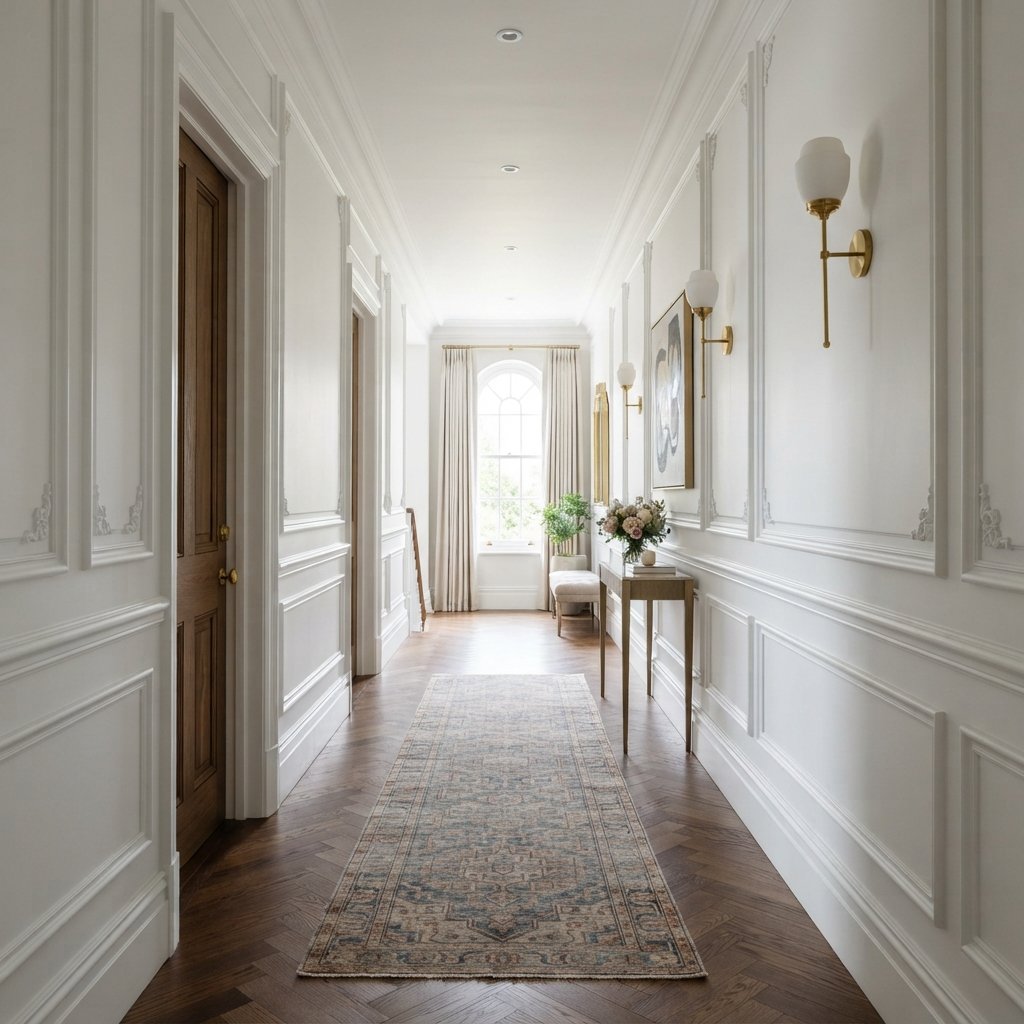
Adding decorative wall molding, such as picture frame panels or simple trim details, brings a tailored, custom feel to hallway walls. This treatment works especially well when painted in a single color, allowing the molding’s shadow lines to do the visual work. It is a popular choice for those wanting a more traditional or elevated look.
Molding can also be used to frame specific art pieces or mirrors along the hallway, giving them a built-in, gallery-like presentation. This detail adds a sense of permanence and craftsmanship that few other upgrades can match. It is a project that rewards patience with a genuinely polished result.
Framed Map Ideas
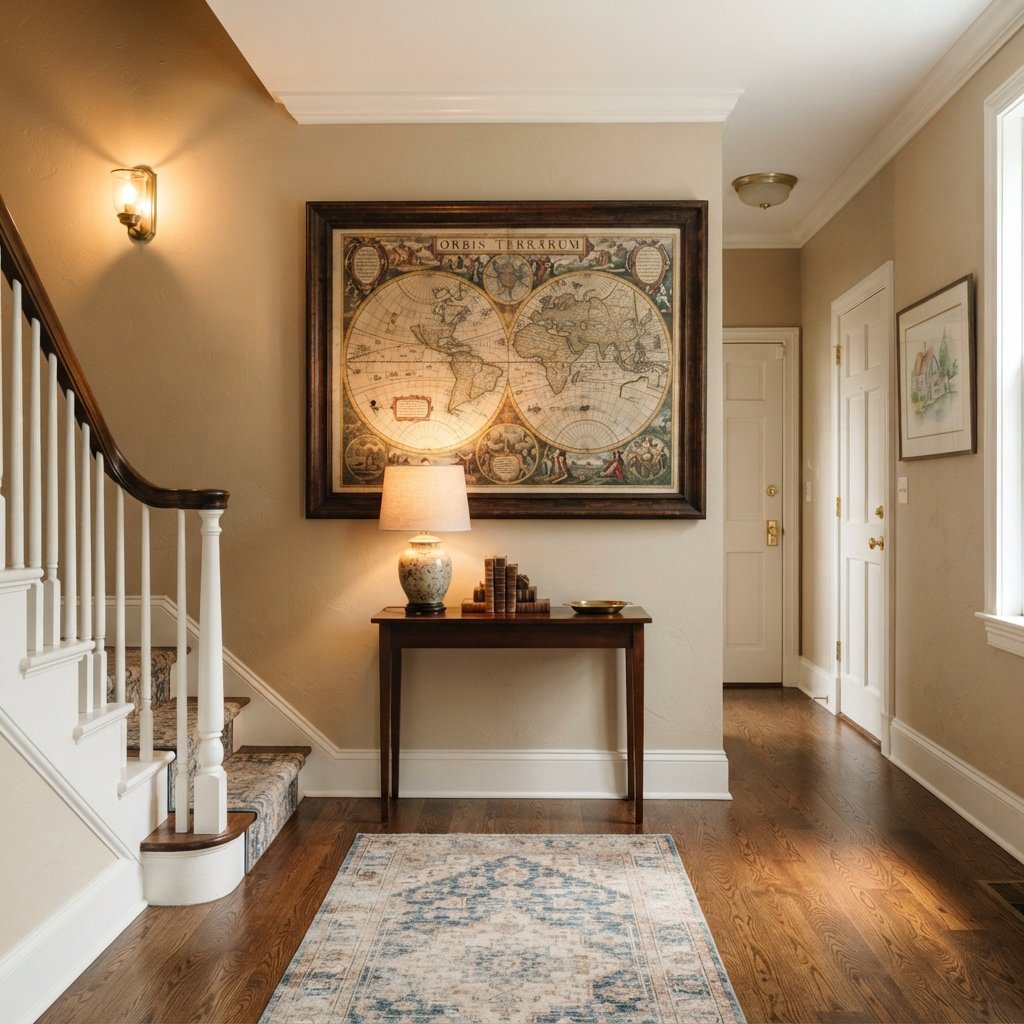
A large framed map adds a worldly, adventurous feel to an upstairs hallway, especially when chosen to reflect a meaningful place or shared travel memories. Vintage-style maps bring warmth and softness, while modern line-art maps lean more minimal and contemporary. Either style makes for a striking focal point at the end of a long hallway.
Pairing a framed map with a simple console table beneath it creates a natural vignette that feels intentional and considered. This idea also works well in a family home, where a map can double as a way to mark places visited together. It is a distinctive alternative to more traditional artwork.
Curtain and Drape Ideas
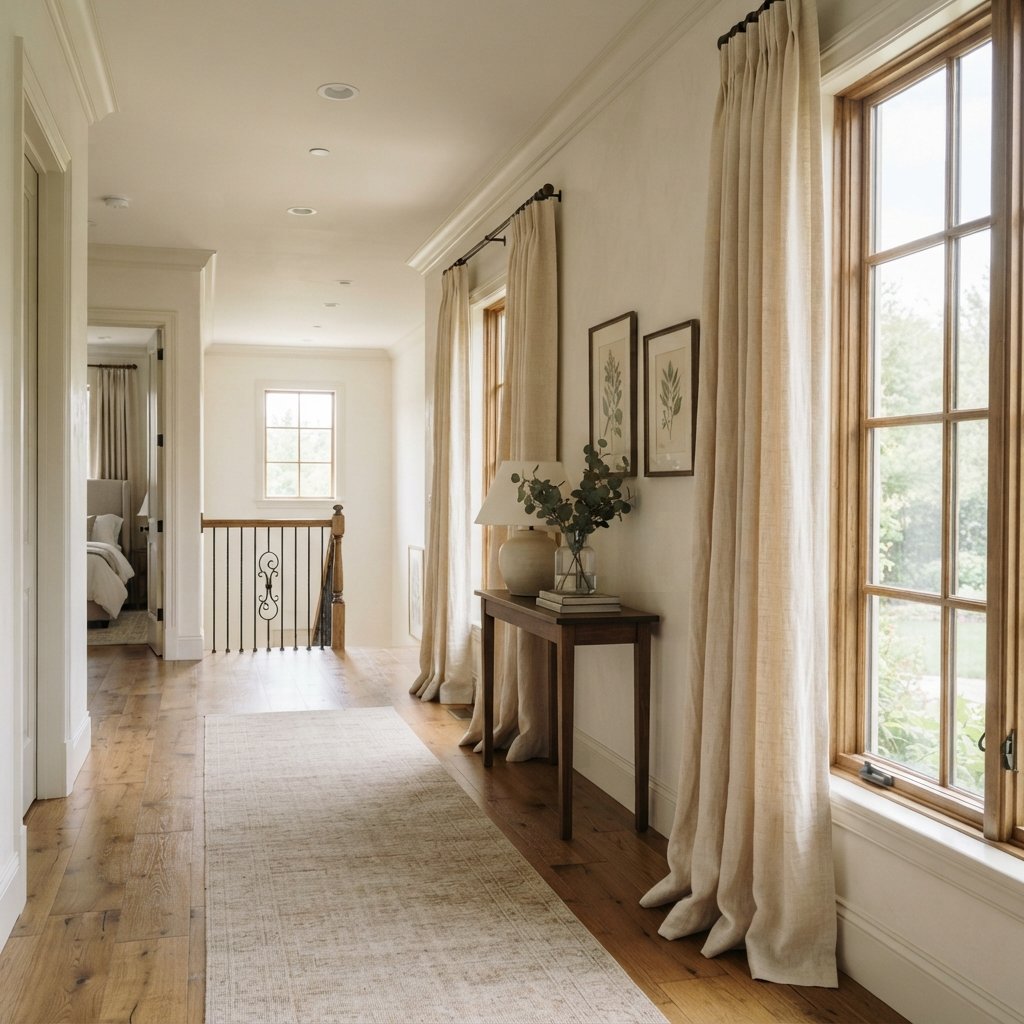
If the hallway includes a window, adding curtains or drapes brings softness and a finished, cozy feel to the space. Sheer fabrics let light filter through gently, while heavier drapes add warmth and a sense of privacy in hallways near bedrooms. This detail often gets overlooked, but it makes a real difference in how polished the space feels.
Choosing a fabric that complements the runner or wall color ties the whole hallway together visually. Even a simple curtain rod and a well-chosen fabric can transform a plain window into a design feature. It is a small, affordable touch with a noticeably cozy payoff.
Minimalist Decor Ideas
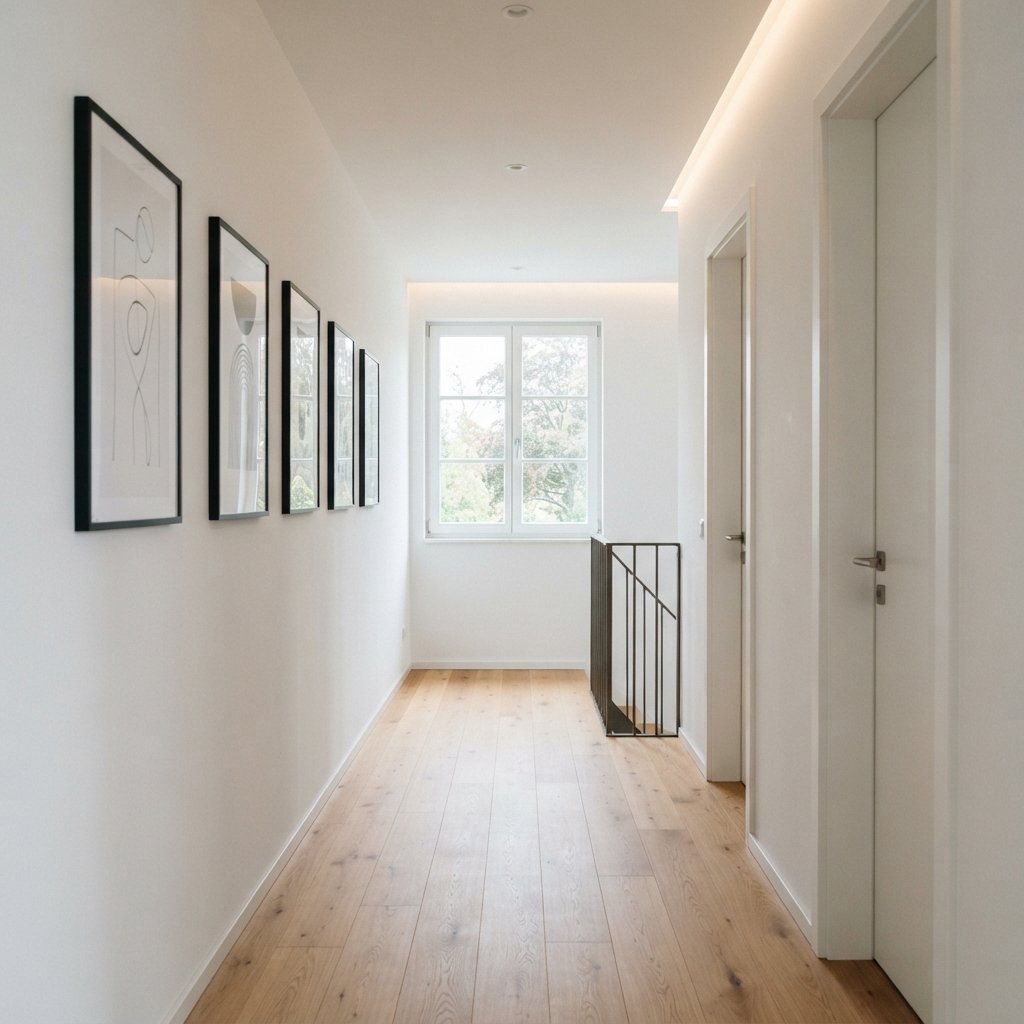
For those who prefer a quieter aesthetic, a minimalist approach to the hallway relies on a few carefully chosen pieces rather than an abundance of decor. A single piece of artwork, a simple light fixture, and a clean color palette can feel just as impactful as a more layered design. This direction suits smaller hallways especially well, since it avoids visual clutter.
Choosing quality over quantity, such as one beautiful vase or a single well-placed mirror, keeps the space feeling calm and intentional. Minimalist hallways also tend to feel more spacious, since the eye has fewer places to land. It is a refined, understated direction that never goes out of style.
Kids’ Hallway Ideas

In family homes, the upstairs hallway can be designed with children in mind, incorporating playful colors, growth charts, or a rotating display of kids’ artwork. A designated art display area lets children’s creativity become part of the home’s decor in a natural, ever-changing way. This approach makes the hallway feel like a shared, lived-in family space.
Durable, washable finishes on walls and floors make sense in hallways with heavy kid traffic, while soft rugs add a cushioned surface for little feet. Adding a low shelf with books or toys within reach also gives children a sense of ownership over the space. It is a wonderfully personal direction for family-focused homes.
FAQs About Upstairs Hallway Ideas
What are the best upstairs hallway ideas for small spaces?
For smaller hallways, lighter wall colors, mirrors, and floating shelves tend to work best since they create the illusion of more space. Slim console tables and narrow runners also help without crowding the walkway.
How can I make an upstairs hallway feel brighter?
Adding a skylight, upgrading to warmer light bulbs, and incorporating mirrors are among the most effective ways to brighten a dim hallway. Lighter wall colors also help reflect available light throughout the space. Even small additions, like a mirror across from a window, can make a noticeable difference.
What flooring works best for upstairs hallway idea?
Durable, quiet flooring options like engineered wood, cork, or carpet with a thick pad tend to work well for hallways, especially upstairs where noise can travel to nearby rooms. A runner rug also adds comfort and helps protect the flooring underneath from daily wear.
How do I add storage to a narrow upstairs hallway?
Floating shelves, built-in cabinets, and slim benches with hidden compartments are excellent ways to add storage without taking up floor space. Utilizing awkward nooks or the space beneath stairs can also unlock additional hidden storage.
What colors work best for upstairs hallway ideas?
Neutral tones like soft white, warm greige, and gentle taupe tend to create a calm, cohesive backdrop for hallways. For those wanting more drama, deep jewel tones or a bold accent wall can add personality without overwhelming the space.
Conclusion
Upstairs hallway ideas prove that even the smallest, most overlooked spaces in a home deserve thoughtful design attention. From gallery walls and statement lighting to reading nooks and hidden storage, there is no single right way to approach this kind of transformation.
Whatever direction feels most inspiring, the upstairs hallway offers a low-pressure opportunity to experiment with color, texture, and personal style. It is a space that touches everyday life more than almost any other room, making even small updates feel worthwhile.